Introduction
Mastering historical inquiry requires distinguishing between eyewitness accounts and later analyses, forming a core competency for Key Stage 2 history education. According to the Historical Association, structured engagement with original artifacts significantly accelerates historical empathy and critical literacy among upper primary students. Understanding primary and secondary sources ks2 equips learners to critically evaluate historical evidence, differentiate between facts and interpretations, and build robust investigative skills. This foundational academic training transitions students from passive receivers of historical narratives to active historical researchers capable of independent source analysis.
Quick Key Takeaways:
- Core Focus: Primary and secondary sources ks2 materials teach students to differentiate between firsthand eyewitness items and later historical accounts.
- Target User: Educators and parents guiding Key Stage 2 students through structured history and social studies curricula.
- Key Recommendation: Pair tangible artifact sorting exercises with guided Academic printable worksheets to reinforce critical evaluation skills.
What This Printable Covers
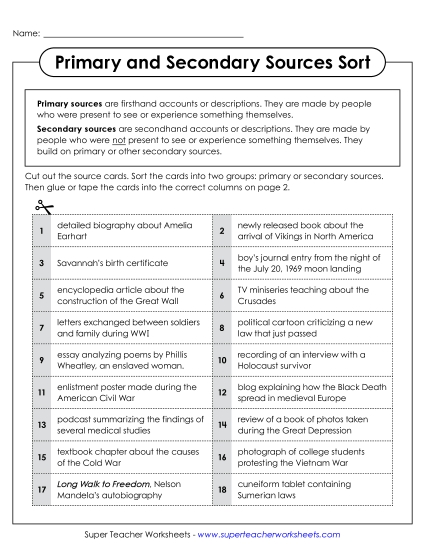
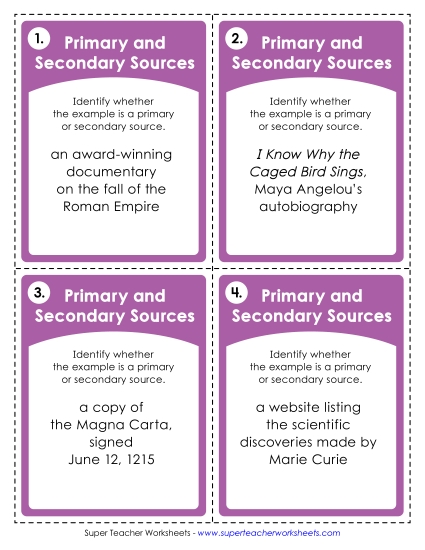
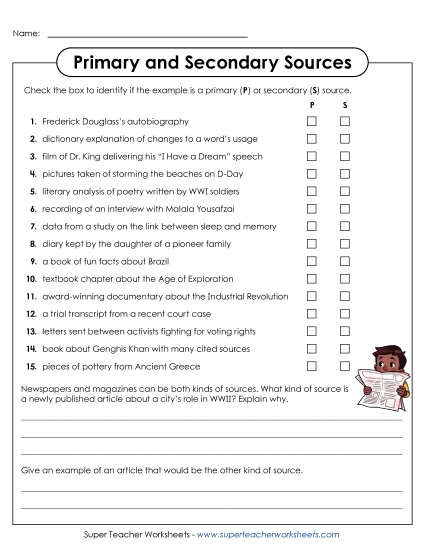
Primary and secondary sources ks2 resources systematically bridge the gap between abstract historical concepts and concrete investigative practice. Aligned with national history curriculum standards, these instructional materials guide learners through identifying, categorizing, and questioning various types of historical evidence. Students engage with diary entries, photographs, and letters alongside textbooks, biographies, and documentaries to understand how historians construct the past. The structured framework ensures learners examine provenance, creator bias, and historical context during every evaluation task.
Key Learning Outcomes
Students successfully completing these activities develop the ability to accurately classify diverse media into eyewitness or secondhand categories. Learners acquire critical thinking proficiencies necessary to question the reliability, origin, and purpose of historical documentation. Furthermore, participants enhance their historical vocabulary by mastering terms such as artifact, eyewitness, interpretation, and historical context. Finally, students apply these analytical frameworks to independently investigate historical events within Worksheet modules designed for independent or collaborative classroom study.
Overview & Skill Breakdown
| Focus Area | Target Skill | Best Practice |
|---|---|---|
| Source Identification | Recognizing firsthand artifact markers | Examine dates, authors, and original mediums carefully. |
| Critical Evaluation | Assessing bias and historical reliability | Compare multiple viewpoints on a single historical event. |
| Historical Synthesis | Combining evidence to form conclusions | Draft short summaries utilizing both source categories. |
How to Use This Worksheet
Implementing primary and secondary sources ks2 printables in educational environments involves a step-by-step investigative approach. Educators begin by introducing physical or digital replicas of historical artifacts, prompting learners to ask initial questions about who created the item and why. Next, students utilize structured graphic organizers to sort the evidence into appropriate evidentiary columns. Facilitators then guide group discussions comparing primary and secondary perspectives on major historical events, fostering deep analytical discourse.
Practical Tips for Success
Preparation involves gathering a diverse mix of visual and textual materials before distribution to ensure varied engagement levels. Execution proceeds smoothly when facilitators encourage students to highlight specific contextual clues, such as publication dates or author credentials, directly on the document. Extension activities challenge learners to interview family members or study current news items, reinforcing the practical application of historical source analysis in everyday contexts.
Stage-Appropriate Recommendations
According to the National Curriculum framework for history, younger Key Stage 2 learners benefit from concrete differentiation tasks focusing on obvious physical artifacts like old photographs and modern textbooks. As students progress toward upper Key Stage 2, instructional strategies shift toward abstract analysis, requiring learners to evaluate conflicting written accounts and subtle creator biases. Establishing these tiered developmental milestones ensures appropriate cognitive challenge and sustained progress throughout primary education.
Structured engagement with original artifacts significantly accelerates historical empathy and critical literacy among upper primary students. — Historical Association
Frequently Asked Questions
Explore More Free Printable Resources
Expanding historical inquiry and critical literacy skills requires access to a diverse array of targeted educational materials. Educators and parents can discover comprehensive learning tools across multiple subjects by visiting the full library at Free Printable For You.
Images References