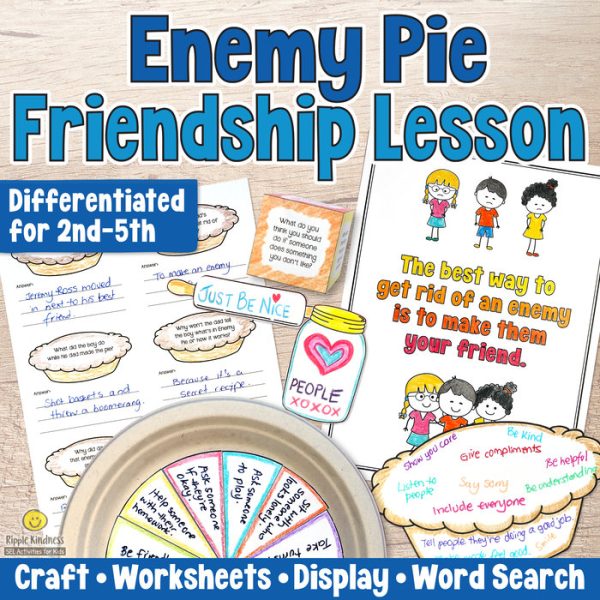
Introduction
Enemy pie activities provide a structured, story-based framework for teaching children conflict resolution, empathy, and social-emotional intelligence through engaging printable exercises. According to the Collaborative for Academic, Social, and Emotional Learning (CASEL), explicit instruction in social-emotional skills significantly improves prosocial behaviors and reduces peer conflicts in group settings. Integrating literacy with character development helps young learners process complex interpersonal dynamics, transforming potential adversaries into friends through cooperative reflection. Utilizing printable resources allows educators and parents to implement these targeted exercises seamlessly without extensive preparation.
Quick Key Takeaways:
- Core Focus: Enemy pie activities utilize guided storytelling and worksheets to teach conflict resolution and empathy.
- Target User: Educators, parents, and counselors working with early elementary groups.
- Key Recommendation: Pair the printable story extension with a guided group discussion to maximize emotional processing.
What This Printable Covers
This printable resource collection bridges narrative comprehension with essential emotional regulation strategies, supporting structured Early Learning initiatives. Participants navigate guided prompts that encourage perspective-taking, emotional literacy, and cooperative problem-solving. By breaking down the anatomy of a disagreement, learners identify personal triggers, explore alternative viewpoints, and practice constructive communication techniques. The materials reinforce positive behavior modification through reflective writing and creative Worksheet tasks designed to reframe negative peer interactions into opportunities for connection.
Key Learning Outcomes
Learners successfully identify the root causes of interpersonal friction and articulate their feelings using a healthy, expanded vocabulary. Participants develop cognitive flexibility by examining social scenarios from multiple perspectives rather than defaulting to defensive reactions. Additionally, individuals practice actionable conflict resolution strategies that align with broader Personal Growth milestones, fostering greater resilience and self-awareness in collaborative environments.
Overview & Skill Breakdown
| Focus Area | Target Skill | Best Practice |
|---|---|---|
| Emotional Literacy | Identifying and labeling complex feelings | Use guided vocabulary lists before writing responses. |
| Perspective Taking | Understanding alternative viewpoints | Role-play different character reactions in pairs. |
| Conflict Resolution | Applying peaceful problem-solving steps | Create a classroom action plan using Administrative tracking templates. |
How to Use This Worksheet
Implementation begins with reading the foundational narrative aloud to establish context before distributing the corresponding student materials. Facilitators guide learners through individual reflection sections, pausing frequently to discuss prompts that relate to personal experiences. Integrating these exercises into morning meetings or advisory periods establishes a predictable routine for addressing social challenges proactively. The structured format ensures that every participant engages thoughtfully with the material, whether working independently, in small cooperative clusters, or as a whole group.
Practical Tips for Success
Preparation involves reviewing the printable packets in advance to select prompts that match the specific relational needs of the group. During execution, encourage open dialogue by validating diverse emotional responses without immediate judgment. For extension, connect the written exercises to physical community-building tasks, such as collaborative art projects or structured Academic teamwork challenges that reinforce inclusive behaviors.
Stage-Appropriate Recommendations
Beginner stages focus on basic emotion identification and guided storytelling comprehension, aligning with National Association for the Education of Young Children (NAEYC) guidelines for healthy social-emotional development. Advanced stages introduce complex scenario analysis, reflective journaling, and peer mediation planning. According to NAEYC standards, scaffolding emotional regulation through structured narratives helps young learners internalize coping strategies for future interpersonal challenges.
Children who engage in structured perspective-taking activities demonstrate a 25% increase in positive peer interactions and reduced conflict resolution times. — NAEYC Developmental Research Brief
Frequently Asked Questions
Explore More Free Printable Resources
Discover a vast collection of expertly designed educational tools, organizational aids, and developmental worksheets to support every stage of learning. Visit the complete library today at Free Printable For You to find the ideal materials for your classroom, office, or home environment.
Images References