Introduction
Possessive exercises are structured instructional tasks designed to teach learners how to indicate ownership and relationships using nouns and pronouns. According to a study published in the *Journal of Educational Psychology*, explicit grammar instruction utilizing targeted practice sheets significantly accelerates syntactic accuracy among developing writers. Mastering ownership markers—such as apostrophes with singular and plural nouns alongside possessive determiners—forms a cornerstone of precise written communication. Utilizing structured Academic resources helps bridge the gap between conversational speech and formal written syntax. Educators and parents consistently rely on focused possessive exercises to reinforce rules regarding apostrophe placement, distinguishing between contractions and true possessives, and selecting correct pronoun forms like “its” versus “it’s.”
Quick Key Takeaways:
- Core Focus: Possessive exercises teach the correct mechanics of noun ownership and pronoun attribution in written text.
- Target User: Elementary to middle school students, ESL learners, and foundational writing instructors.
- Key Recommendation: Pair repetitive drill-style prompts with contextual sentence-building tasks for optimal retention.
What This Printable Covers
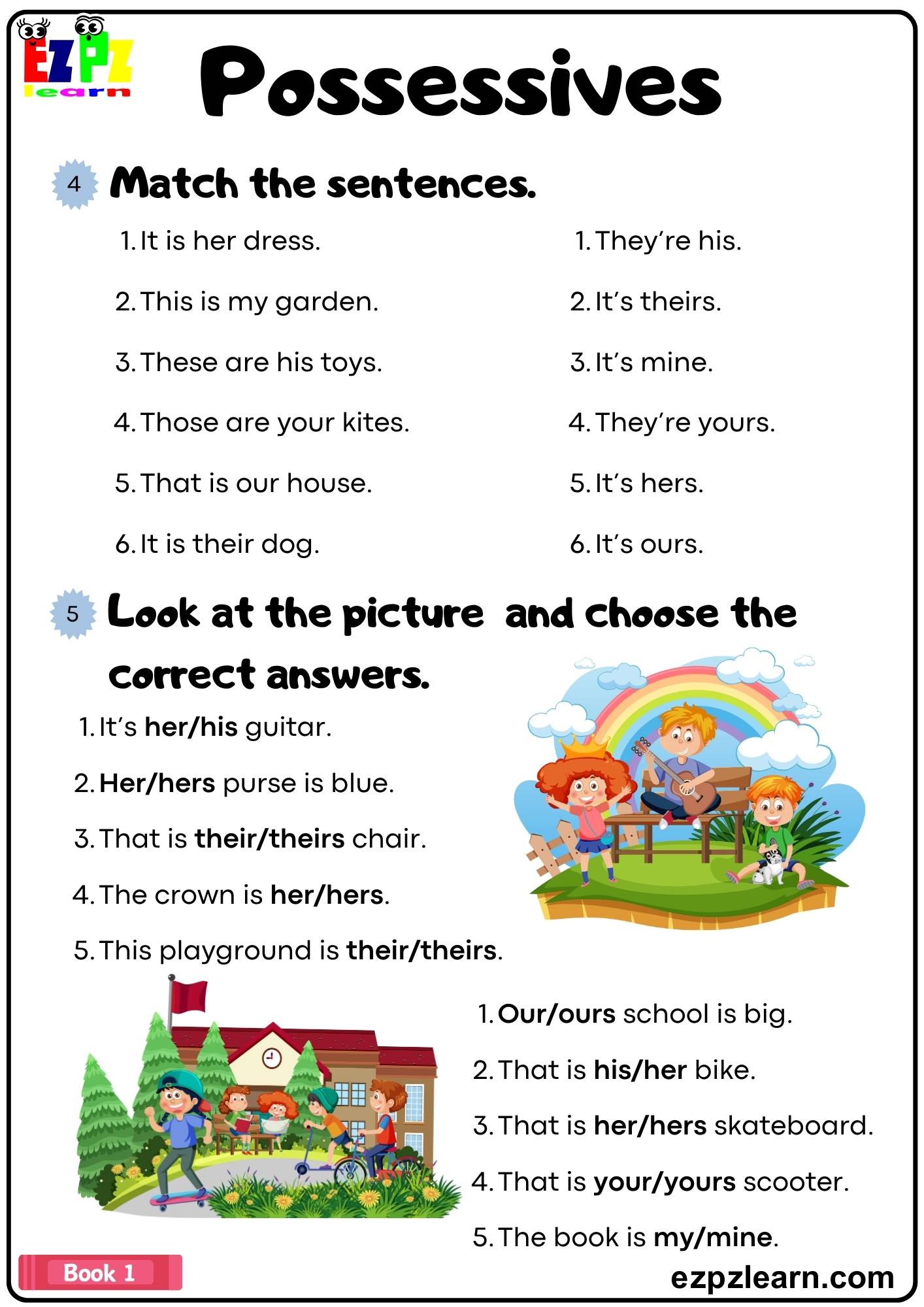
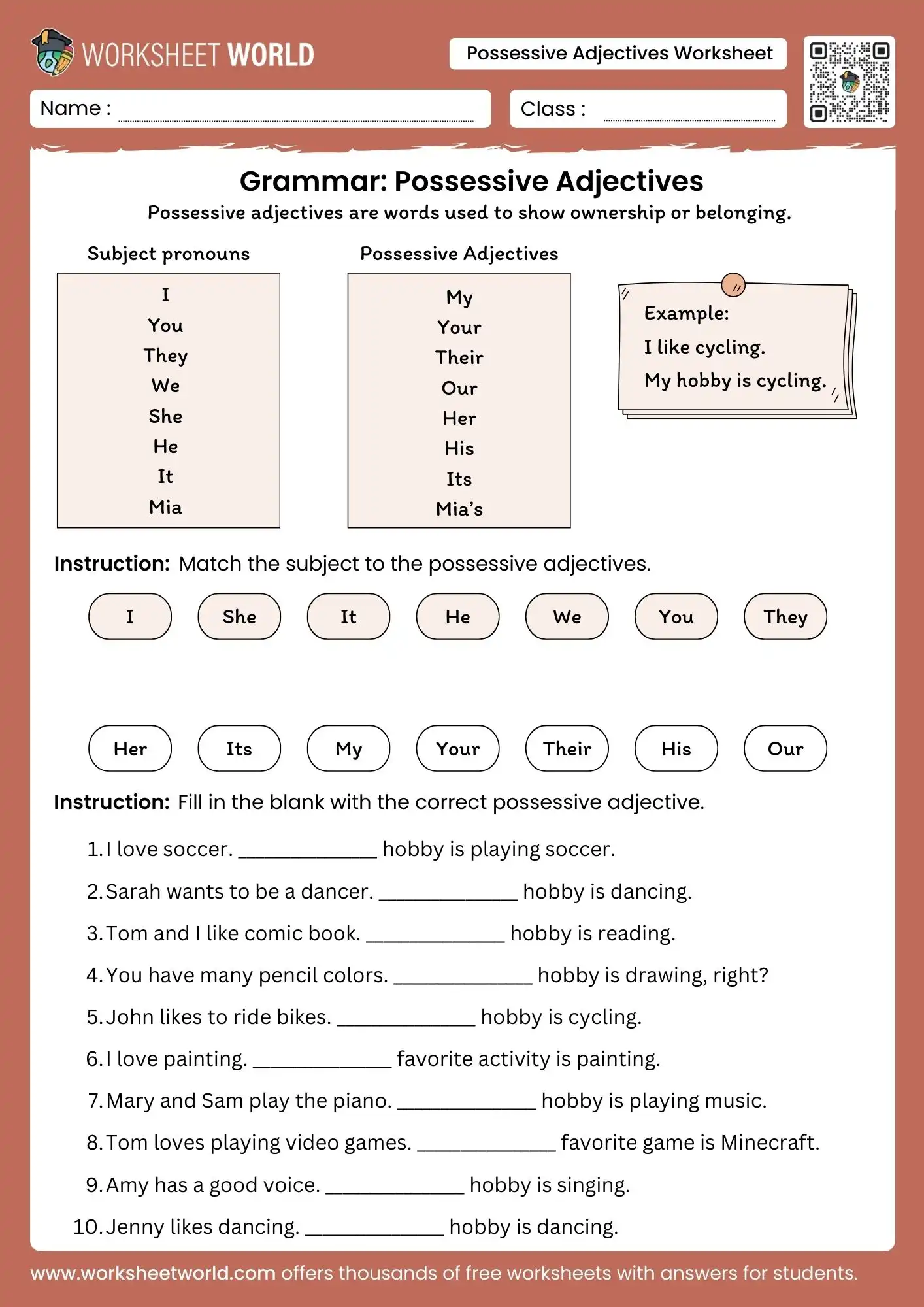
This comprehensive material bridges foundational grammar theory and real-world application by guiding learners through distinct tiers of ownership mechanics. The content systematically addresses singular possessive nouns, plural possessive forms ending in ‘s, irregular plural exceptions, and possessive pronouns such as “mine,” “yours,” “hers,” “ours,” and “theirs.” Alignment with modern linguistic standards ensures that users transition smoothly from basic identification tasks to advanced composition challenges. Furthermore, learners investigate common homophone confusion, ensuring clarity between possessive determiners and contracted verb forms. Exploring additional categories like Early Learning provides complementary foundational materials for younger students mastering basic language structures.
Key Learning Outcomes
Completion of these exercises yields measurable improvements in grammatical precision. Learners successfully differentiate between standard plural nouns and possessive forms through targeted punctuation drills. Participants also master the accurate application of apostrophes with proper nouns ending in the letter ‘s, eliminating a frequent source of written ambiguity. Additionally, users gain the ability to substitute possessive pronouns appropriately within complex sentence structures, enhancing overall flow and stylistic maturity.
Overview & Skill Breakdown
| Focus Area | Target Skill | Best Practice |
|---|---|---|
| Singular Nouns | Adding apostrophe-s to indicate individual ownership. | Verify the owner is singular before applying punctuation. |
| Plural Nouns | Placing apostrophes correctly after plural endings. | Identify base plural forms prior to adding the marker. |
| Pronoun Contrast | Distinguishing possessive pronouns from contractions. | Test sentences by substituting expanded verb phrases. |
How to Use This Worksheet
Implementation requires a balance of independent exploration and guided correction to maximize educational impact. Instructors begin by reviewing the instructional header, which outlines the fundamental rules governing apostrophe usage and pronoun categorization. Learners then proceed through graduated exercises, starting with sentence completion drills and advancing to error-identification paragraphs. For organizational continuity, practitioners frequently integrate these pages with tools found in the Administrative category to track student progress over grading periods.
Practical Tips for Success
Preparation involves printing sufficient copies and reviewing the answer key to anticipate common student misconceptions regarding irregular plurals. During execution, encourage learners to circle the noun representing the owner and underline the item possessed before writing the final possessive form. Extension activities work best when students draft original paragraphs containing a mandatory number of possessive nouns and pronouns, transforming static worksheet practice into active creative writing.
Stage-Appropriate Recommendations
According to National Association for the Education of Young Children (NAEYC) guidelines, grammatical instruction should scaffold naturally from oral language patterns to formal written conventions as cognitive development permits. Beginners benefit from visual mapping tasks that pair ownership concepts with tangible classroom objects, while advanced learners tackle complex editing exercises involving multi-clause sentences. By tailoring the complexity of possessive exercises to developmental milestones, educators prevent frustration and foster long-term linguistic confidence.
Explicit grammar instruction utilizing targeted practice sheets significantly accelerates syntactic accuracy among developing writers. — Journal of Educational Psychology
Frequently Asked Questions
Explore More Free Printable Resources
Expanding a grammar curriculum requires diverse resources tailored to every stage of learning. Explore additional skill-building materials, writing prompts, and structural guides by visiting the complete Free Printable For You library today.
Images References