Introduction
Adjective order exercises provide a systematic method for mastering the strict sequence required when multiple modifiers describe a single noun in the English language. Native speakers naturally cluster modifiers from general opinion down to specific material, yet explicit academic practice remains vital for formal writing clarity. According to a 2021 linguistic study published in the Journal of Cognitive Psychology, explicit grammar instruction significantly accelerates the internalization of complex syntactic rules among learners. Adjective order exercises transform intuitive habits into conscious, error-free structural competence for both children and adult language learners.
Quick Key Takeaways:
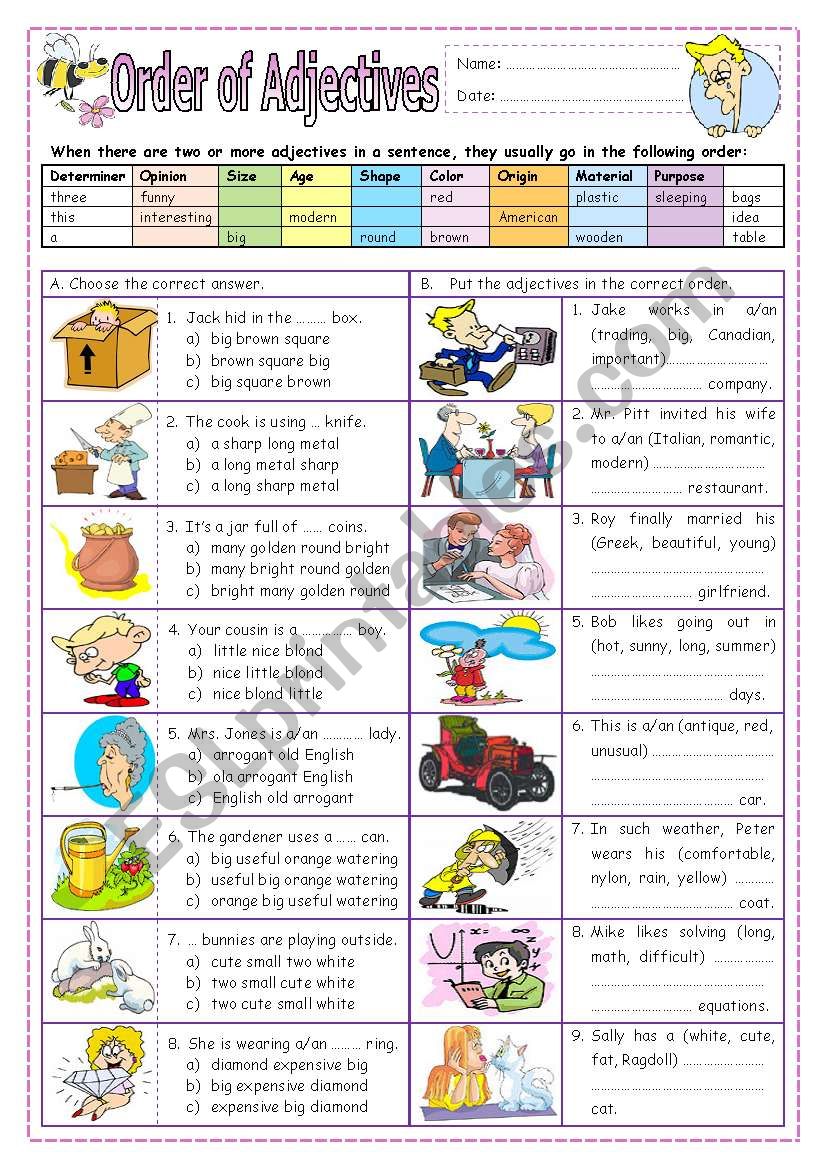
- Core Focus: Mastering the standard multi-word modifier sequence (opinion, size, age, shape, color, origin, material, purpose).
- Target User: Educators, parents, and students focusing on advanced grammar and Academic excellence.
- Key Recommendation: Combine structured fill-in-the-blank drills with sentence-building gamification.
What This Printable Covers
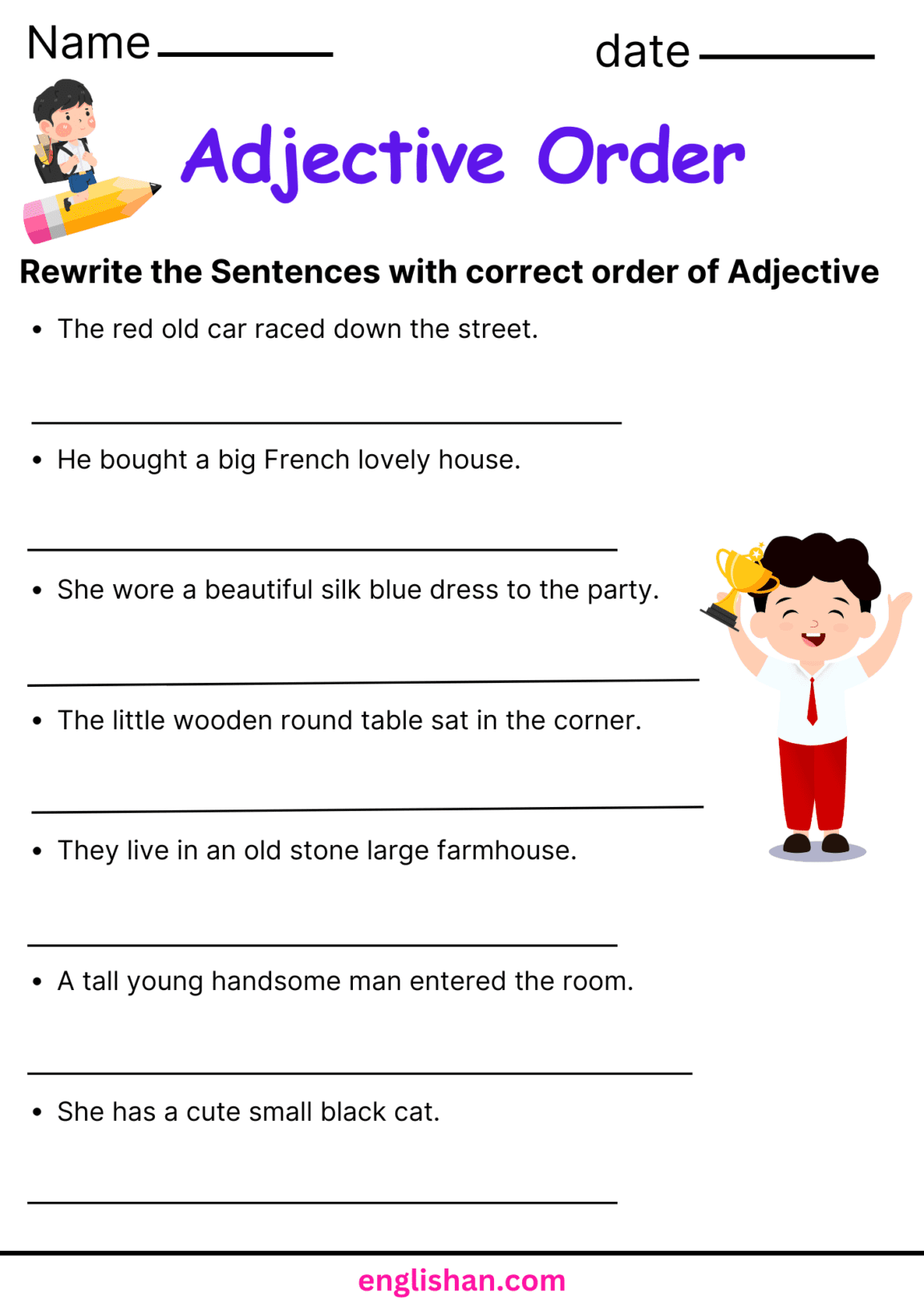
This structured resource covers the exact taxonomy of English modifiers, moving students systematically through the Royal Order of Adjectives. The material bridges foundational parts of speech with advanced descriptive writing, ensuring learners understand why “big red ball” sounds correct while “red big ball” violates intuitive grammatical norms. Through targeted drills found in any comprehensive Worksheet collection, users analyze scrambled modifier strings and reconstruct them according to established linguistic standards.
Key Learning Outcomes
Students successfully identify the distinct category of each modifier in a multi-word phrase. Learners accurately apply the standard sequencing rule—opinion, size, age, shape, color, origin, material, and purpose—without hesitation. Participants also enhance descriptive writing portfolios by expanding simple sentences into richly detailed compositions while maintaining syntactic integrity. Ultimately, users eliminate common stylistic errors, boosting overall writing fluidity and Personal Growth in linguistic confidence.
Overview & Skill Breakdown
| Focus Area | Target Skill | Best Practice |
|---|---|---|
| Sequence Identification | Recognizing modifier categories (opinion vs. material) | Color-code different adjective types during initial drills. |
| Sentence Reconstruction | Ordering scrambled modifier strings correctly | Read aloud to test natural rhythmic flow. |
| Creative Application | Inventing original multi-modifier descriptions | Limit sentences to a maximum of three adjectives for clarity. |
How to Use This Worksheet
Implementation begins with a brief review of the standard modifier mnemonic device (OSASCOMP) before distributing the printed materials. Educators and parents should guide learners through the first two examples collaboratively, checking for conceptual understanding of categories like physical size versus abstract opinion. Independent practice follows, allowing learners to apply sequential rules directly to isolated phrases and paragraph-level editing tasks. For supplementary classroom organization and record-keeping templates, pairing these lessons with resources from Administrative categories ensures smooth curriculum management.
Practical Tips for Success
Preparation involves laminating reusable activity pages and gathering dry-erase markers for low-stakes, repeatable practice sessions. During execution, encourage learners to underline the head noun first so the modifiers remain clearly anchored to their target. Extension activities work best when students peer-edit their own narrative writing, actively hunting for misplaced modifiers and correcting them using the structured rules learned on the page.
Stage-Appropriate Recommendations
Beginner stages focus on pairs of adjectives, typically contrasting subjective opinions with objective physical sizes or colors, while advanced learners tackle dense four-modifier phrases. According to the Common European Framework of Reference for Languages (CEFR) guidelines on syntactic progression, multi-modifier mastery aligns strongly with B1-B2 communicative competence milestones. Educators utilize these developmental benchmarks to ensure instructional pacing matches the cognitive readiness of the target audience.
CEFR Framework Standard B1-B2 Syntax Milestone — Common European Framework of Reference for Languages
Frequently Asked Questions
Explore More Free Printable Resources
Expanding a grammar curriculum requires diverse, high-quality materials that support every stage of learning development. Educators and parents can discover an extensive library of supplementary grammar sheets, vocabulary builders, and organizational tools designed to make teaching seamless. Visit the complete collection today at Free Printable For You to find the ideal assets for upcoming lessons.
Images References