Introduction
Action words for class 2 represent the foundational verbs that transform basic second-grade writing from static noun-and-object lists into dynamic, expressive sentences. Mastering these parts of speech enables young learners to communicate precise movements, mental processes, and states of being with clarity. According to cognitive linguistics research published by the National Council of Teachers of English, contextualized grammar instruction significantly accelerates vocabulary acquisition and reading comprehension in primary school students compared to isolated memorization drills. Utilizing structured educational printables provides children with the necessary visual and kinesthetic scaffolding to bridge spoken vocabulary and written syntax, ensuring lasting literacy development.
Quick Key Takeaways:
- Core Focus: Action words for class 2 build foundational verb recognition, tense awareness, and descriptive writing skills.
- Target User: Second-grade educators, homeschooling parents, and academic support specialists targeting primary literacy.
- Key Recommendation: Pair static verb identification worksheets with physical movement games to anchor abstract grammar concepts.
What This Printable Covers
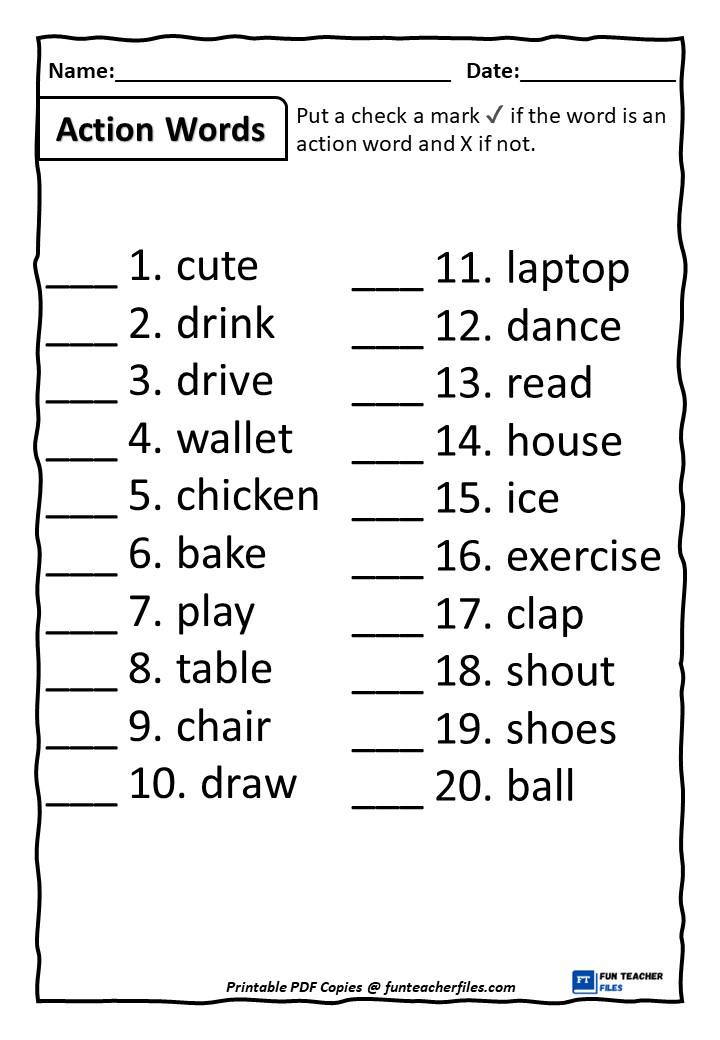
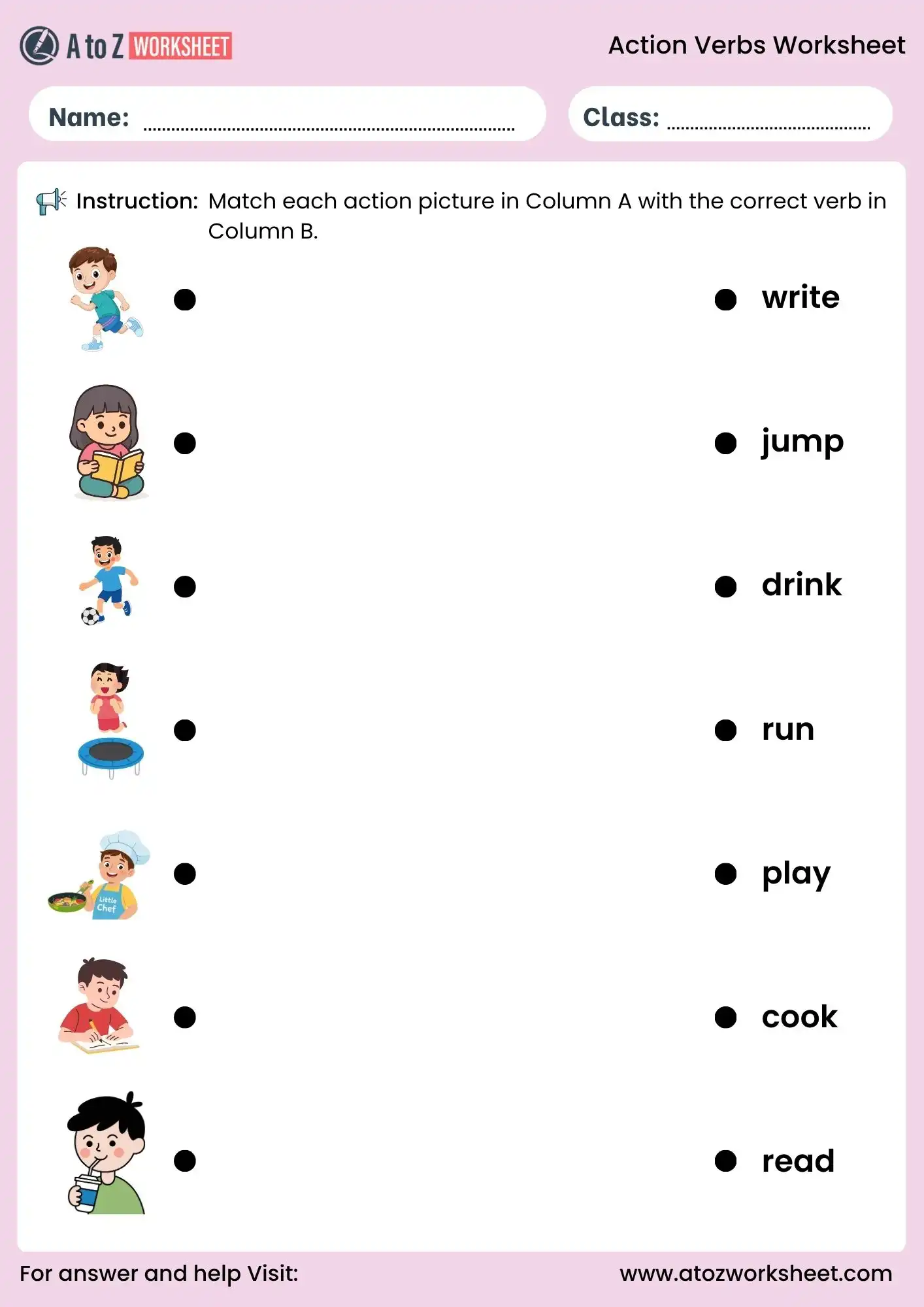
The curriculum centers on identifying, categorizing, and applying action verbs across various sentence structures designed specifically for seven and eight-year-old learners. Instruction moves progressively from recognizing physical verbs—such as running, jumping, and writing—to mental process verbs like thinking, guessing, and remembering. Alignment with standard Academic benchmarks ensures that children build competency in subject-verb agreement and basic past, present, and future tense formations. Through targeted exercises found in every structured Worksheet, learners systematically replace weak verbs with vivid alternatives to elevate their creative writing and everyday communication.
Key Learning Outcomes
Students successfully differentiate between nouns and action verbs within mixed-word sentences, enhancing part-of-speech awareness. Learners accurately apply regular and irregular past-tense verb endings to maintain proper grammatical consistency across paragraphs. Children expand their active vocabulary by integrating precise action words into descriptive journal entries and storytelling prompts. Finally, learners demonstrate improved reading fluency by predicting upcoming actions based on contextual verb usage in short passages.
Overview & Skill Breakdown
| Focus Area | Target Skill | Best Practice |
|---|---|---|
| Identification | Spotting verbs in sentences | Highlight verbs in green before writing |
| Tense Mastery | Shifting past and present | Use timeline charts for irregular verbs |
| Vocabulary Expansion | Replacing weak with strong verbs | Consult synonym word banks during drafting |
How to Use This Worksheet
Implementation in the classroom or home environment requires a balanced approach combining independent practice with collaborative discussion. Educators can introduce the material by projecting a blank template onto a shared board, guiding students through the initial identification exercises as a collective group before releasing them to work independently. This resource also seamlessly integrates into foundational Early Learning centers where tactile matching games reinforce abstract linguistic rules. Establishing a predictable routine for completing these grammar pages helps students transition smoothly into focused academic periods.
Practical Tips for Success
Preparation involves reviewing the specific verb categories featured on the sheet to anticipate any challenging irregular forms that require pre-teaching. Execution is optimized by encouraging students to act out the verbs physically before writing them down, connecting kinesthetic feedback directly to cognitive processing. Extension activities include asking learners to write a mini-story using at least five newly discovered action words, followed by peer-review sessions to check for proper tense usage and spelling accuracy.
Stage-Appropriate Recommendations
Developmental pacing is crucial when teaching action words for class 2, aligning closely with the National Association for the Education of Young Children (NAEYC) standards for primary literacy. Beginner learners benefit from visual icon pairings next to each verb to support decoding and comprehension, while advanced students should be challenged to identify helping verbs and auxiliary structures within complex sentence formats. Scaffolding instruction prevents cognitive overload and keeps learners engaged across diverse proficiency levels.
Primary literacy milestones emphasize contextualized verb mastery for 75% of second-grade reading proficiency gains — National Association for the Education of Young Children (NAEYC)
Frequently Asked Questions
Explore More Free Printable Resources
Supporting a child’s academic journey extends far beyond a single grammar lesson, requiring ongoing practice across multiple subjects and developmental domains. Explore the complete library of teacher-approved educational assets, classroom management tools, and skill-building activities available at Free Printable For You to keep learners motivated and academically challenged throughout the entire school year.
Images References