
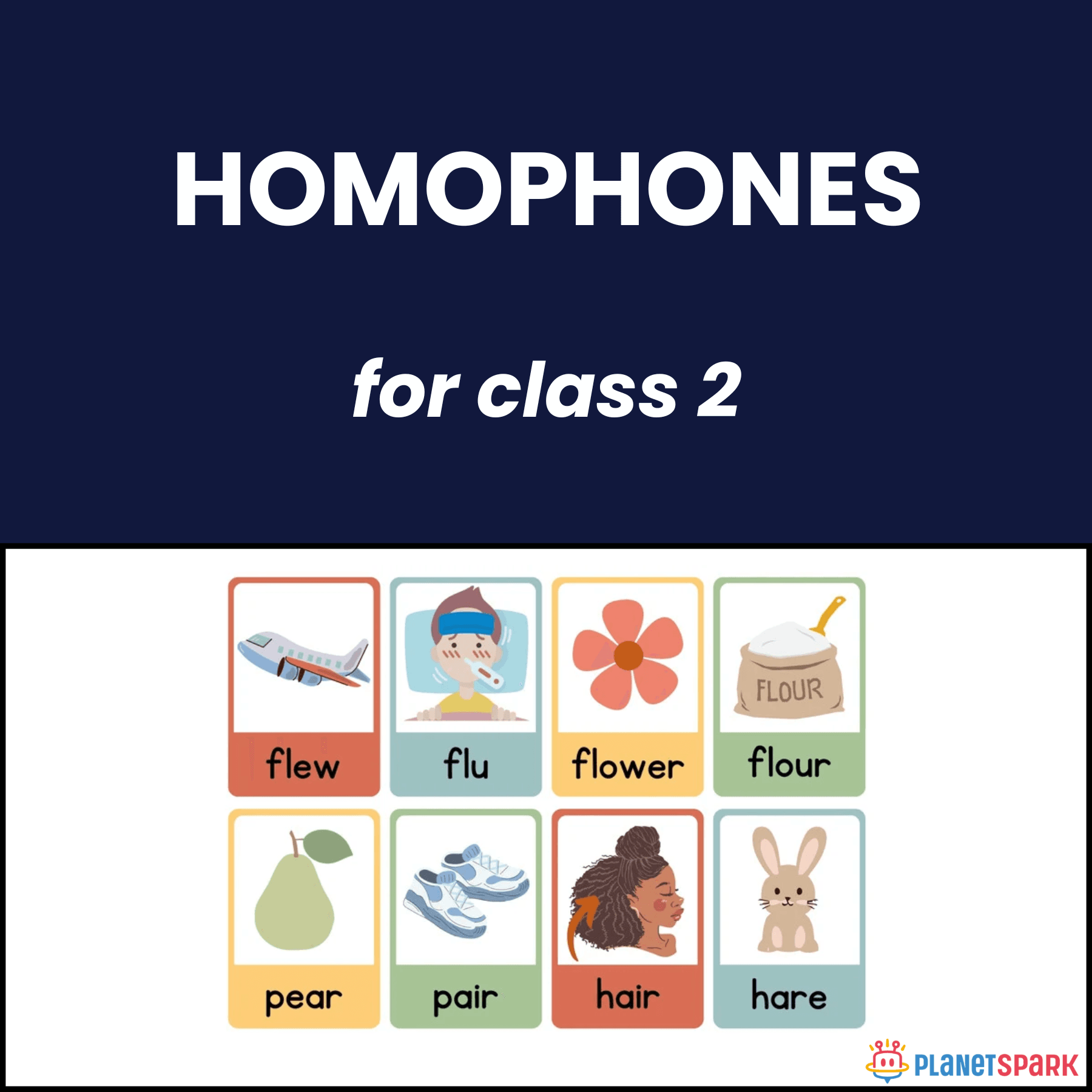
Introduction
Mastering homophones for class 2 requires systematic exposure to words that sound identical but possess distinct spellings and meanings, such as “sea” and “see.” According to the National Institute of Child Health and Human Development, explicit phonics and vocabulary instruction during second grade significantly enhances reading comprehension and orthographic mapping. Structured educational printables provide targeted exercises that transform abstract spelling rules into recognizable visual patterns, aiding young learners in differentiating between commonly confused homophones through contextual writing practice.
Quick Key Takeaways:
- Core Focus: Homophones for class 2 targets words with identical pronunciations and varied spellings.
- Target User: Designed for second-grade students, elementary educators, and homeschooling parents.
- Key Recommendation: Pair visual flashcards with contextual Worksheet activities for optimal retention.
What This Printable Covers
This resource focuses on high-frequency homophone pairs frequently introduced in second-grade language curricula, bridging the gap between auditory processing and written expression. The materials guide learners through sentence completion, picture-word association, and spelling differentiation within structured Academic frameworks. By isolating frequently mixed-up pairs like “write” and “right” or “blue” and “blew,” the activities eliminate guesswork and build foundational writing accuracy.
Key Learning Outcomes
Students develop the ability to correctly identify and spell homophones based on contextual sentence clues, distinguishing semantic differences effortlessly. Learners enhance their vocabulary range by recognizing how identical sounds convey entirely separate ideas. Furthermore, children strengthen independent editing skills, allowing them to spot and correct homophone errors within their own daily creative writing assignments.
Overview & Skill Breakdown
| Focus Area | Target Skill | Best Practice |
|---|---|---|
| Word Recognition | Auditory-visual pairing | Use visual icons alongside written homophone pairs. |
| Context Clues | Semantic differentiation | Practice fill-in-the-blank sentences daily. |
| Spelling Accuracy | Orthographic mapping | Incorporate guided tracing and spelling drills. |
How to Use This Worksheet
Effective implementation begins with a brief introductory discussion where adults explain that words can sound the same while looking completely different. Following this verbal overview, learners complete the designated exercises independently or in small groups to reinforce newly acquired spelling rules. Tracking progress over multiple sessions ensures that tricky pairs transition from short-term memory into long-term vocabulary storage.
Practical Tips for Success
Preparation involves printing multiple copies of the target Early Learning resources and gathering colored markers for visual highlighting. Execution succeeds best when adults read sentence prompts aloud while children point to the correct homophone choice before writing it down. Extension activities can include having learners invent silly comic strips using both variations of a targeted homophone pair in a single story.
Stage-Appropriate Recommendations
According to the National Association for the Education of Young Children (NAEYC), developmental progression in second-grade literacy requires scaffolding from oral phonemic awareness to complex written application. Beginners benefit from matching exercises paired with illustrative pictures, whereas advanced learners thrive when challenged to write original paragraphs utilizing difficult homophone pairs correctly without visual prompts.
Explicit phonics and vocabulary instruction during second grade significantly enhances reading comprehension and orthographic mapping. — National Institute of Child Health and Human Development
Frequently Asked Questions
Explore More Free Printable Resources
Expanding a child’s vocabulary foundation requires a diverse array of complementary exercises and organizational tools. Discover additional subjects, seasonal writing practice, and Administrative learning aids by visiting the complete library at Free Printable For You to support ongoing educational growth.
Images References


