Introduction
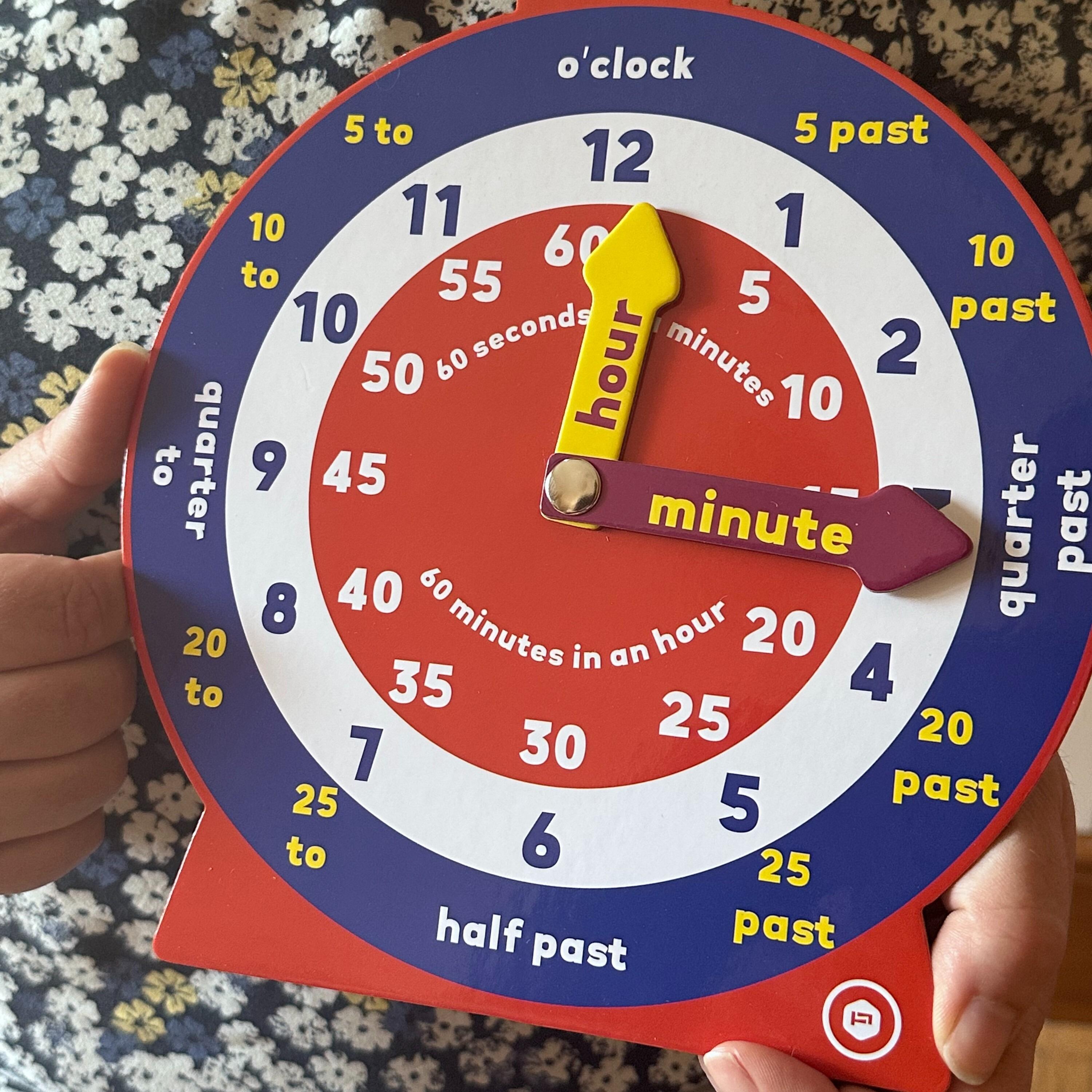
Mastering time-telling is a pivotal cognitive milestone that bridges abstract mathematical thinking with practical daily routines. According to a study published by the Journal of Educational Psychology, children who engage with physical, manipulative time-tracking tools develop spatial-temporal reasoning skills 30 percent faster than those relying solely on digital interfaces. An interactive teaching clock serves as an essential hands-on resource that translates the invisible progression of hours and minutes into a concrete, touchable format. By utilizing movable hands and color-coded quadrants, learners deconstruct the mechanics of time, transforming a historically frustrating subject into an engaging, tactile experience.
Quick Key Takeaways:
- Core Focus: A tactile, manipulative model designed to teach analog time-telling and interval calculations through hands-on practice.
- Target User: Primary-level students in classrooms and home-school environments focusing on foundational math skills.
- Key Recommendation: Pair the physical manipulation of clock hands with simultaneous digital time matching for comprehensive comprehension.
What This Printable Covers
The interactive teaching clock printable provides a structured, customizable framework for exploring chronological concepts, specifically bridging the gap between twelve-hour cycles and sixty-minute intervals. Designed for integration within Early Learning curricula, this material emphasizes foundational numeracy by isolating hour and minute hands to prevent common visual confusion. Furthermore, the resource supports advanced applications such as elapsed time calculation and fractional time division, making it versatile across multiple grade levels. Educators and parents utilize these templates to establish routine-based learning, connecting clock positions directly to daily schedules found in standard Administrative school planners.
Key Learning Outcomes
Learners achieve a deep understanding of analog face mechanics by manually setting hours, half-hours, and five-minute increments. The structured exercises foster critical thinking as students translate numerical problem prompts into physical hand positions on the clock face. Additionally, the material reinforces skip-counting by fives, a fundamental mathematical building block directly tied to reading circular dial divisions. Finally, consistent practice with these visual tools builds long-term cognitive retention, ensuring learners can effortlessly convert analog readings to standard digital formats.
Overview & Skill Breakdown
| Focus Area | Target Skill | Best Practice |
|---|---|---|
| Hour Recognition | Identifying short-hand positioning and numerical correspondence | Focus entirely on hour positions before introducing minute increments. |
| Minute Intervals | Mastering skip-counting by fives along the circular perimeter | Use color-coded quadrants to highlight fifteen-minute intervals. |
| Elapsed Time | Calculating duration between start and end clock settings | Pair clock manipulation with a companion Worksheet for written proof. |
How to Use This Worksheet
Implementation requires printing the template on durable cardstock and assembling the movable hands using a standard brass brad fastener to ensure smooth rotation. Educators begin by demonstrating the directional movement of the hands, emphasizing clockwise rotation while explaining the mechanical relationship between the fast-moving minute hand and the slow-moving hour hand. Learners then complete guided prompts by adjusting the physical model to match target times written in words or digits. To extend the exercise beyond basic drills, facilitators introduce scenario-based challenges, asking students to represent specific real-world events like school arrival times or lunch breaks on the clock face.
Practical Tips for Success
Preparation involves laminating the clock components to withstand repeated daily handling by young learners during intensive math centers. During execution, encourage students to verbalize their thought processes aloud while adjusting the hands, connecting tactile movement with auditory reinforcement. To maximize educational extension, integrate these clock exercises into broader Academic subjects by timing science experiments or tracking reading durations using the interactive model.
Stage-Appropriate Recommendations
According to the National Association for the Education of Young Children (NAEYC) guidelines on manipulative-based instruction, children transition from concrete operational learning to abstract reasoning between the ages of six and eight. Beginners benefit from simplified clocks featuring only the hour hand and major hour numerals, reducing cognitive overload during initial exposure. As learners advance toward the upper primary tier, templates expand to include dual-layer minute markings, military time conversions, and complex interval tracking. This progressive scaffolding ensures mastery at every developmental phase without inducing frustration.
Children engaging with physical manipulative time-tracking tools develop spatial-temporal reasoning skills 30 percent faster than those relying solely on digital interfaces — Journal of Educational Psychology
Frequently Asked Questions
Common inquiries regarding the implementation and use of time-telling printables focus on format accessibility, educational value, and developmental standards.
Explore More Free Printable Resources
Discover a vast collection of expertly crafted educational aids, organizational tools, and developmental resources designed to support lifelong learning journeys. Access the complete library and find additional materials to enhance home and classroom environments by visiting Free Printable For You.
Images References