Introduction
Likes and dislikes examples for students serve as foundational tools for self-expression, emotional intelligence, and interpersonal bonding in educational environments. According to the Collaborative for Academic, Social, and Emotional Learning (CASEL), structured self-reflection activities significantly enhance a learner’s self-awareness and social competence. By evaluating personal preferences, individuals build vocabulary, articulate boundaries, and discover shared commonalities with peers. Integrating these exercises into daily routines supports cognitive development and fosters an inclusive classroom culture.
Quick Key Takeaways:
- Core Focus: Likes and dislikes examples for students provide structured prompts to articulate personal preferences and build foundational self-awareness.
- Target User: Educators, parents, and developmental specialists utilizing printable guides in classrooms and home-school settings.
- Key Recommendation: Pair graphic organizers with verbal sharing circles to reinforce vocabulary retention and active listening skills.
What This Printable Covers
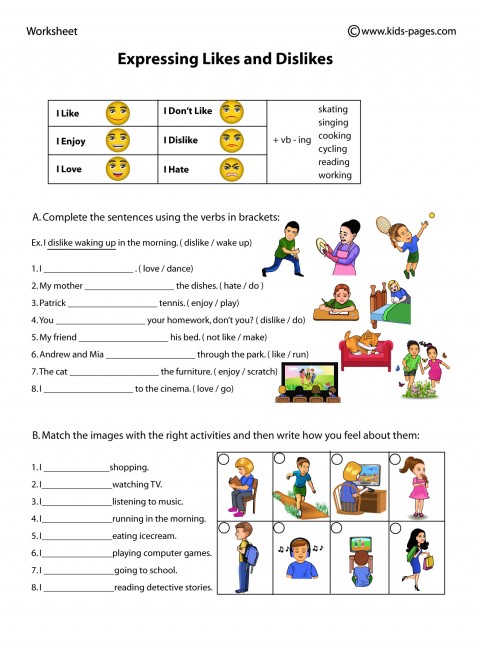
This curated resource offers comprehensive prompts designed to help learners categorize everyday items, activities, foods, and concepts into positive and negative preferences. Aligned with developmental milestones, these exercises bridge concrete observations with abstract emotional regulation. Utilizing a structured Worksheet format, participants practice fine motor skills through writing and drawing while organizing thoughts logically. The materials guide users through identifying sensory triggers, academic affinities, and social inclinations, creating a comprehensive profile of individual inclinations.
Key Learning Outcomes
Engaging with these categorization exercises strengthens vocabulary acquisition by introducing descriptive adjectives and preference-based terminology. Learners develop critical thinking skills by evaluating why specific choices elicit positive or negative reactions. Additionally, these materials enhance communication competencies, empowering participants to articulate their needs and boundaries clearly to educators and peers. Documenting personal tastes also supports long-term identity formation and boosts confidence in group settings.
Overview & Skill Breakdown
| Focus Area | Target Skill | Best Practice |
|---|---|---|
| Sensory Preferences | Identifying physical likes and dislikes | Use visual aids for tactile and auditory choices |
| Academic Interests | Mapping favorite subjects and learning styles | Connect preferences to future goal setting in Academic topics |
| Social Expression | Communicating boundaries and affinities | Incorporate collaborative sharing frameworks |
How to Use This Worksheet
Implementing these tools effectively requires a balance of independent reflection and guided group discussion. Begin by introducing core vocabulary related to preferences, ensuring all participants understand how to differentiate between mild dislike and strong aversion. Allow participants dedicated quiet time to complete the graphical organizers or writing prompts independently. Following individual completion, facilitate small-group sharing sessions where learners can compare answers, discovering unique differences and unexpected commonalities among their peers in supportive environments.
Practical Tips for Success
Preparation involves gathering drawing supplies, visual word banks, and organizing foundational Administrative folders to track progress over time. During execution, encourage descriptive elaboration rather than single-word answers, prompting participants to explain the reasoning behind their chosen preferences. For extension activities, transform completed charts into persuasive speaking prompts or creative writing essays exploring why personal tastes evolve and how diversity in perspective enriches community life.
Stage-Appropriate Recommendations
Early learners benefit from pictorial representations and sorting games, aligning with National Association for the Education of Young Children (NAEYC) standards for sensory-based exploration found in Early Learning curricula. Advanced learners transition toward abstract reasoning, analyzing how personal values influence consumer choices, career paths, and lifelong habits explored through Personal Growth frameworks. Tailoring the complexity of prompts ensures sustained engagement across diverse developmental stages.
Structured self-reflection significantly enhances self-awareness and social competence in educational environments. — Collaborative for Academic, Social, and Emotional Learning (CASEL)
Frequently Asked Questions
Explore More Free Printable Resources
Expand educational toolkits with diverse learning aids, organizational charts, and developmental exercises by visiting the complete library at Free Printable For You today.
Images References