Introduction
Structured foundational practice accelerates early numerical literacy by establishing consistent spatial awareness and stroke memory. According to research published by the National Institutes of Health, systematic handwriting and tracing exercises directly strengthen fine motor control and neurological pathways associated with visual-spatial processing. Within early childhood education, tracing numbers 1 20 serves as a crucial bridge between basic numeral recognition and advanced mathematical composition. Utilizing carefully designed worksheet layouts allows learners to master sequential counting while simultaneously refining pencil grip, pressure regulation, and directional alignment.
Quick Key Takeaways:
- Core Focus: Systematic tracing numbers 1 20 builds fine motor control and numerical sequence fluency.
- Target User: Early childhood educators, parents, and primary developmental intervention specialists.
- Key Recommendation: Pair structured tracing sheets with tactile counting objects to reinforce magnitude comprehension.
What This Printable Covers
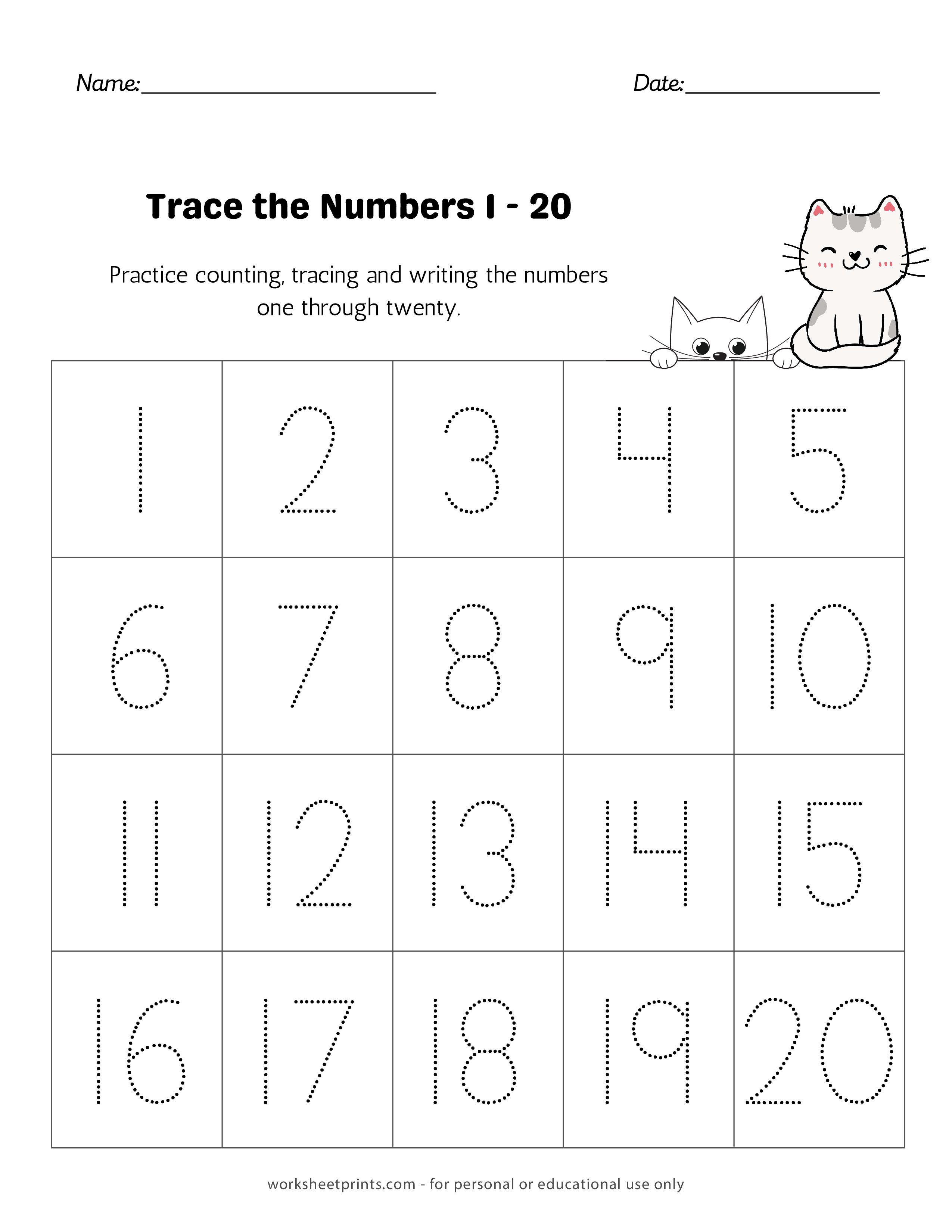
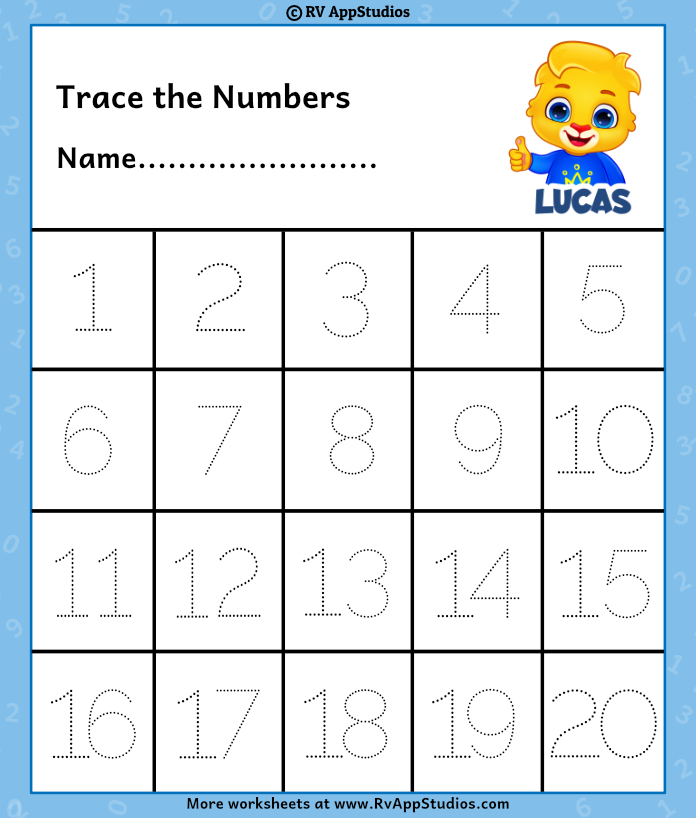
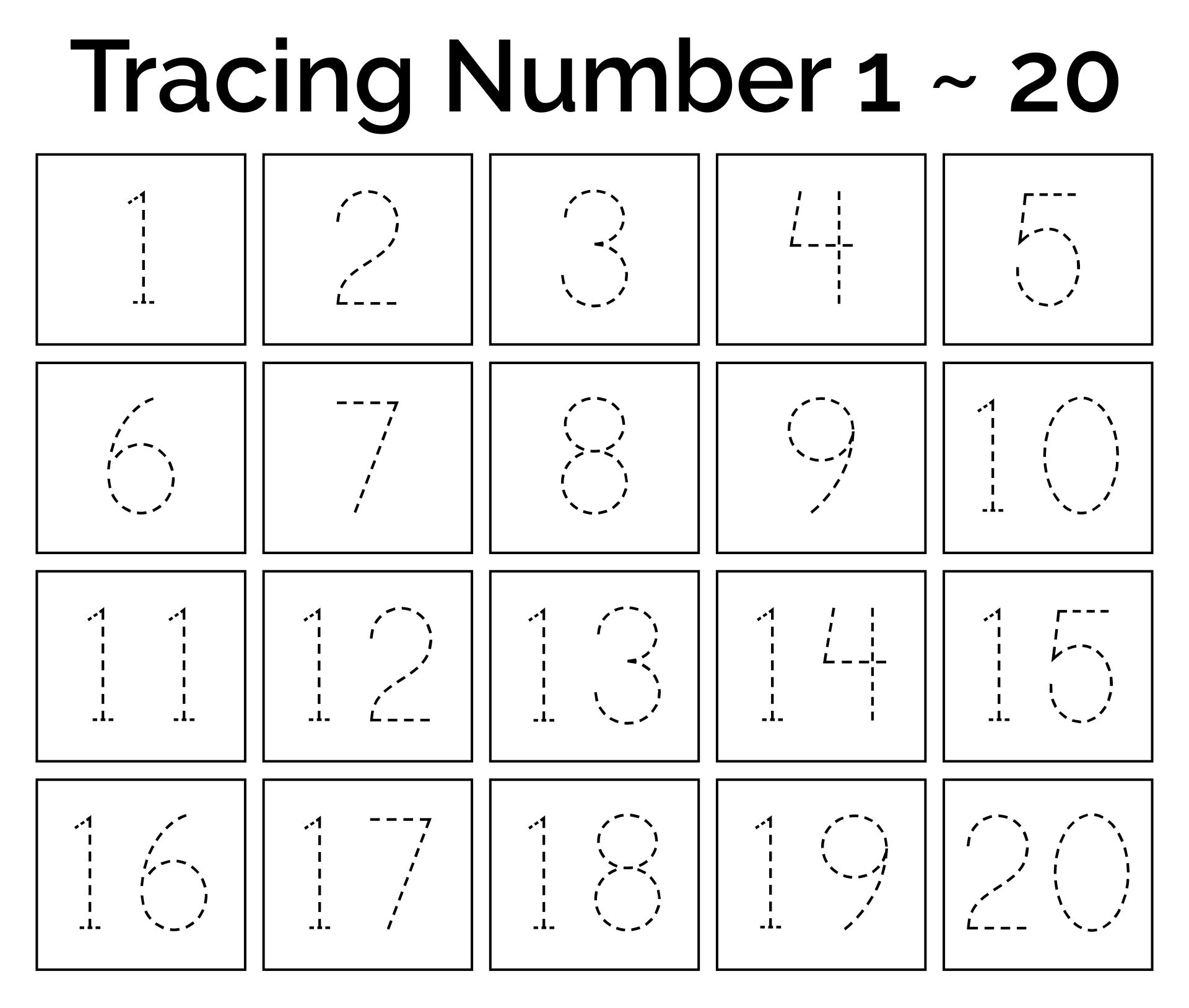
This comprehensive resource provides structured guided pathways for every integer from one to twenty, transitioning learners from isolated digit formation to sequential number writing. Foundational instruction within this domain aligns closely with guidelines established by the Early Learning sector, ensuring that cognitive load remains balanced while learners process both single-digit and double-digit numbers. Each row incorporates directional arrows, starting dots, and fading dotted lines to promote independent handwriting mastery without over-reliance on full visual prompts.
Key Learning Outcomes
Practicing these numerical formations establishes essential academic competencies. Learners develop precise pencil control by following structured paths from top to bottom and left to right. Sequential arrangement up to twenty reinforces ordinal understanding and lays the groundwork for place value concepts. Furthermore, repetitive guided stroke execution enhances muscle memory, enabling fluid, automatic numeral transcription that reduces writing fatigue during longer writing tasks found within standard Academic curricula.
Overview & Skill Breakdown
| Focus Area | Target Skill | Best Practice |
|---|---|---|
| Digit Formation | Precision stroke mechanics for numbers 1-9 | Emphasize starting dots and top-down motion |
| Double-Digit Transition | Spatial spacing and proportion for numbers 10-20 | Practice writing digits side-by-side with uniform sizing |
| Sequence Fluency | Numerical order and visual tracking up to 20 | Incorporate verbal counting aloud while tracing |
How to Use This Worksheet
Implementation requires a supportive environment equipped with appropriate writing utensils, such as thick primary pencils or washable markers that encourage proper tripod grip. Educators and facilitators can integrate these templates into morning routines, math centers, or homeschooling schedules. To maximize durability and allow for repeated practice, laminating the sheets or sliding them into clear dry-erase pockets enables daily reuse with dry-erase markers.
Practical Tips for Success
Preparation involves setting up a clutter-free workspace with proper lighting and an ergonomic chair adjusted for optimal writing posture. During execution, encourage tracing slowly while verbally identifying each number to anchor auditory memory alongside visual and tactile inputs. For extension, challenge learners to write the numbers independently on blank lines below the traced examples, or ask them to draw corresponding quantities of small objects to link abstract symbols with concrete values.
Stage-Appropriate Recommendations
According to National Association for the Education of Young Children (NAEYC) developmental standards, young learners progress through distinct stages of graphic representation, moving from random scribbles to controlled intentional marks. Beginners benefit from large-format dotted paths focusing exclusively on numbers one through ten, utilizing multi-sensory tracing with fingers before introducing writing tools. Intermediate learners advance to tracing numbers 1 20 in full sequences, gradually transitioning to independent box-grid writing where fading guides promote self-correction and spatial awareness.
Systematic handwriting and visual-spatial tracing exercises directly strengthen fine motor control and foundational numerical fluency. — National Institutes of Health
Frequently Asked Questions
Explore More Free Printable Resources
Discover a vast collection of supplementary materials designed to support every step of the educational journey. Access thousands of high-quality templates ranging from foundational skill builders to organizational tools by visiting Free Printable For You today.
Images References