
Introduction
Targeted English activity for class 3 materials bridge the crucial gap between foundational decoding and complex reading comprehension. Structured language exercises provide the necessary scaffolding for eight- and nine-year-old learners transitioning from learning-to-read to reading-to-learn. According to a study published by the Education Endowment Foundation, regular targeted writing and vocabulary exercises improve literacy retention by up to twenty-five percent compared to unstructured instruction. Deploying a well-designed english activity for class 3 supports educators and parents by offering measurable benchmarks in grammar acquisition, sentence expansion, and paragraph structure. Related guide: Co Teaching Activities.
Quick Key Takeaways:
- Core Focus: Building grammar, vocabulary, and reading comprehension through structured writing exercises.
- Target User: Educators, parents, and third-grade learners in classroom or homeschool settings.
- Key Recommendation: Integrate short, daily practice sheets rather than long, infrequent study sessions.
What This Printable Covers
Third-grade language curricula demand focused attention on parts of speech, punctuation rules, and narrative sequencing. The selected english activity for class 3 modules target these competencies by introducing guided practice in identifying verbs, adjectives, and proper noun usage within context. Furthermore, these printables incorporate short reading passages followed by analytical questions, fostering critical thinking. Aligning with contemporary educational standards, the materials emphasize contextual vocabulary acquisition, ensuring students understand not just definitions, but proper application in creative writing and daily communication.
Key Learning Outcomes
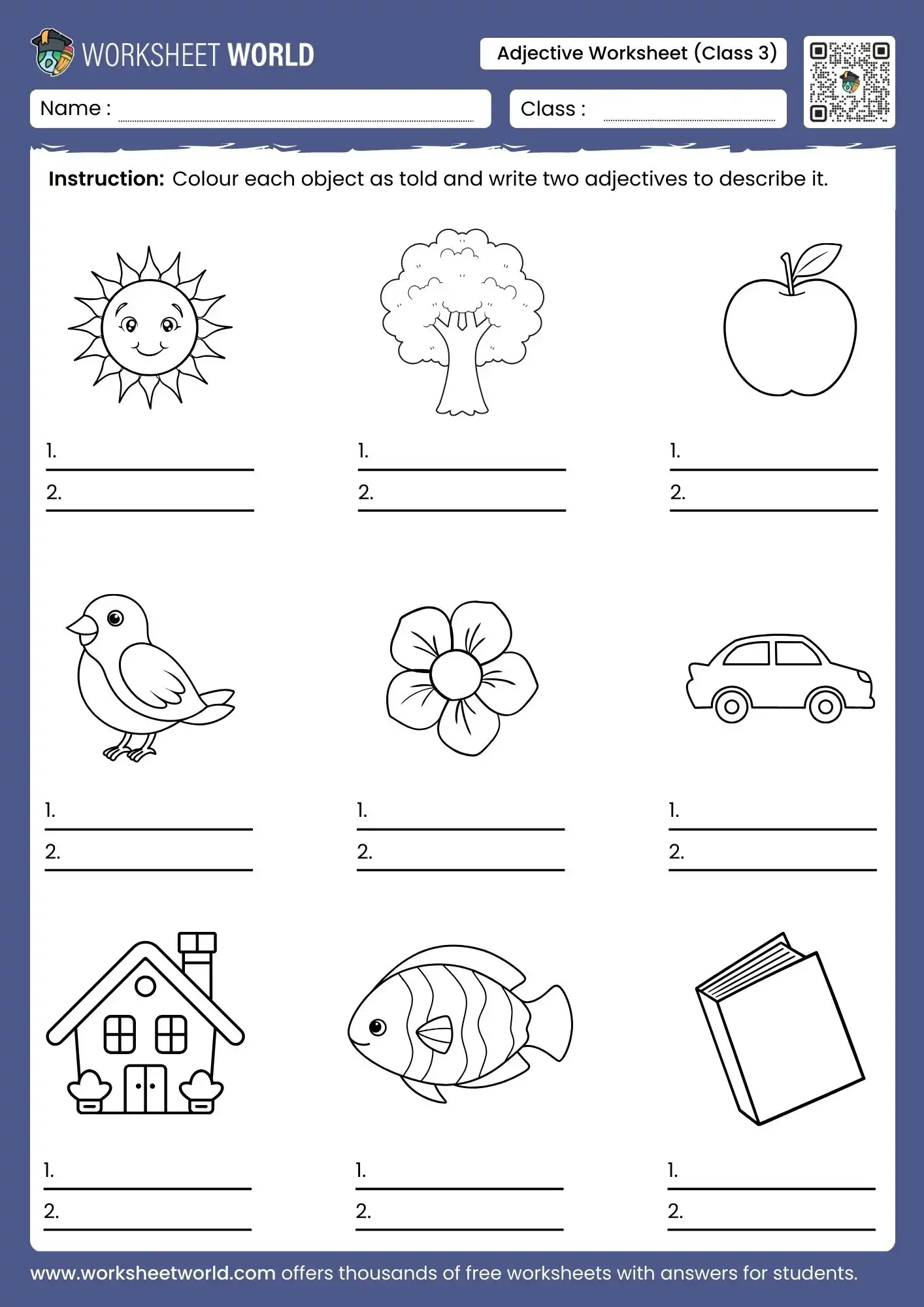
Primary achievements include mastering irregular past-tense verbs and applying correct punctuation to complex sentences. Learners also develop the ability to organize thoughts into coherent paragraphs with distinct topic sentences and supporting details. Additionally, vocabulary expansion exercises encourage active usage of descriptive adjectives, enhancing both expressive writing and verbal articulation skills across various Academic subjects.
Overview & Skill Breakdown
| Focus Area | Target Skill | Best Practice |
|---|---|---|
| Grammar & Syntax | Parts of speech identification | Daily 10-minute targeted drill |
| Reading Comprehension | Inference and main idea extraction | Guided reading before questions |
| Vocabulary Expansion | Contextual synonym application | Sentence creation using new words |
How to Use This Worksheet
Effective implementation requires a balance of independent practice and guided review. An english activity for class 3 worksheet works best when introduced at the start of a literacy center rotation or assigned as a focused morning warm-up task. Educators and parents should first review the instructions collaboratively with the learner to clarify expectations and model the initial question. Following completion, reviewing errors together transforms mistakes into valuable learning moments, reinforcing the underlying grammatical rule rather than simply grading the output.
Practical Tips for Success
Preparation involves printing sufficient copies and having colored pencils ready for underlining parts of speech or circling punctuation marks. During execution, encourage learners to read sentences aloud to catch structural errors naturally through auditory feedback. For extension, challenge advanced students to rewrite completed paragraphs by substituting stronger verbs and adjectives, pushing creative boundaries beyond standard Worksheet requirements.
Stage-Appropriate Recommendations
Structuring difficulty levels ensures every child experiences both challenge and success. According to the Common Core State Standards for English Language Arts, third-grade instruction should systematically progress from identifying basic sentence components to constructing multi-paragraph compositions. Beginning learners benefit from visual word banks and fill-in-the-blank formats, while advanced students thrive on open-ended prompts requiring critical evaluation and independent editing.
25% Literacy Retention Boost — Education Endowment Foundation
Frequently Asked Questions
Explore More Free Printable Resources
Enhance daily lesson planning and study organization by exploring additional curated educational materials designed for all developmental stages. Access the full library of resources at Free Printable For You to support comprehensive learning journeys.
Images References


