Introduction
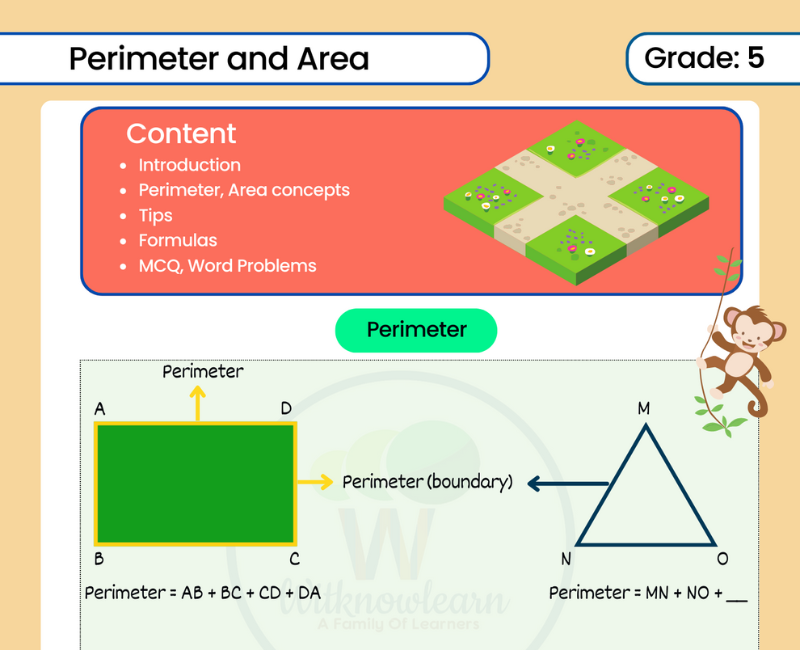
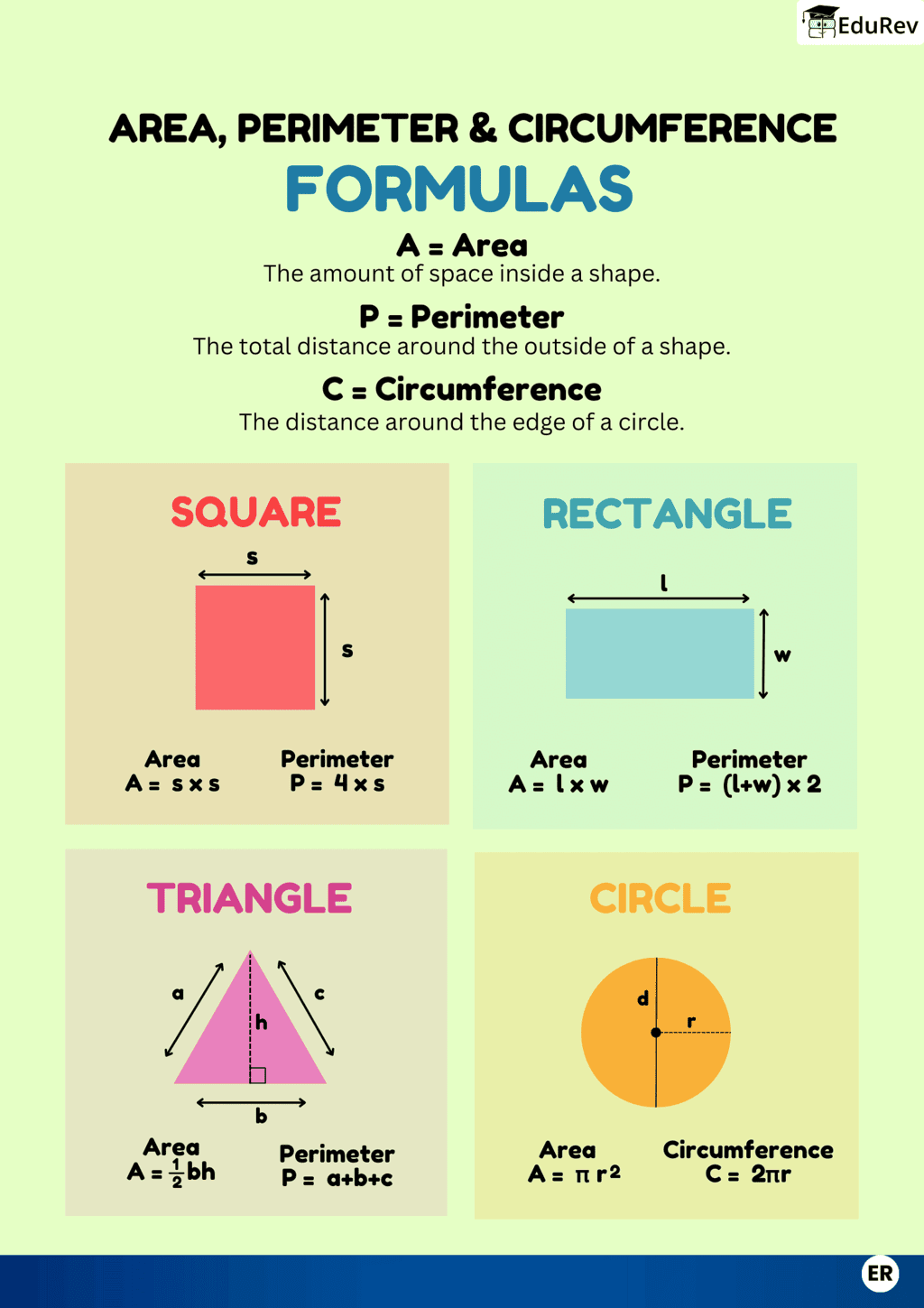
Perimeter and area class 5 mastery establishes the fundamental geometric reasoning required for advanced mathematical problem-solving by teaching learners to quantify the boundary length and interior space of two-dimensional shapes. According to the National Council of Teachers of Mathematics research, students who manipulate physical models before solving abstract geometric equations demonstrate a thirty-five percent increase in conceptual retention. Effective academic practice relies on structured instructional routines that transition students smoothly from counting unit squares to applying standard multiplication formulas. Perimeter and area class 5 curricula bridge basic shape recognition with complex multi-step word problems involving compound figures, rectangles, and squares. Related guide: Pyp Teaching Tools.
Quick Key Takeaways:
- Core Focus: Mastering the calculation and differentiation of boundary lengths versus interior surface measurements for standard polygons.
- Target User: Fifth-grade students, educators, and homeschooling parents seeking targeted mathematical practice.
- Key Recommendation: Integrate grid paper exercises alongside formula memorization to reinforce spatial intuition.
What This Printable Covers
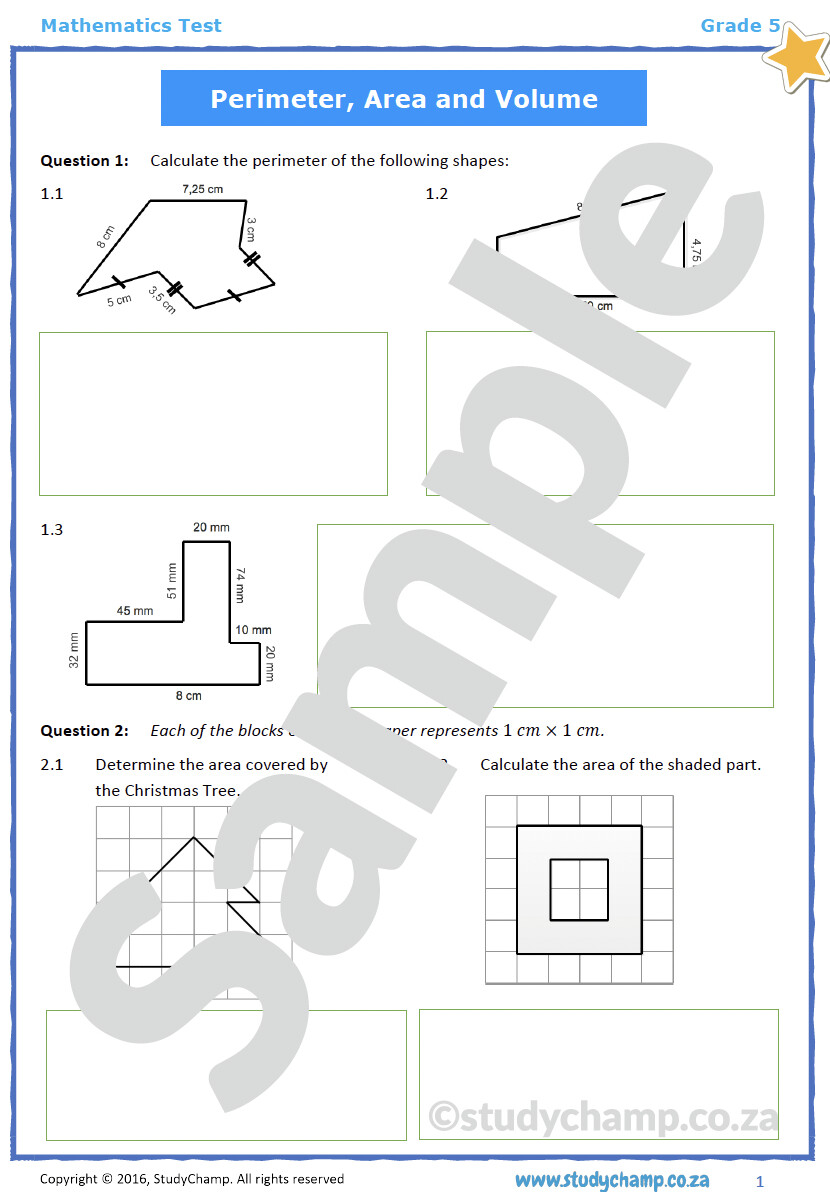
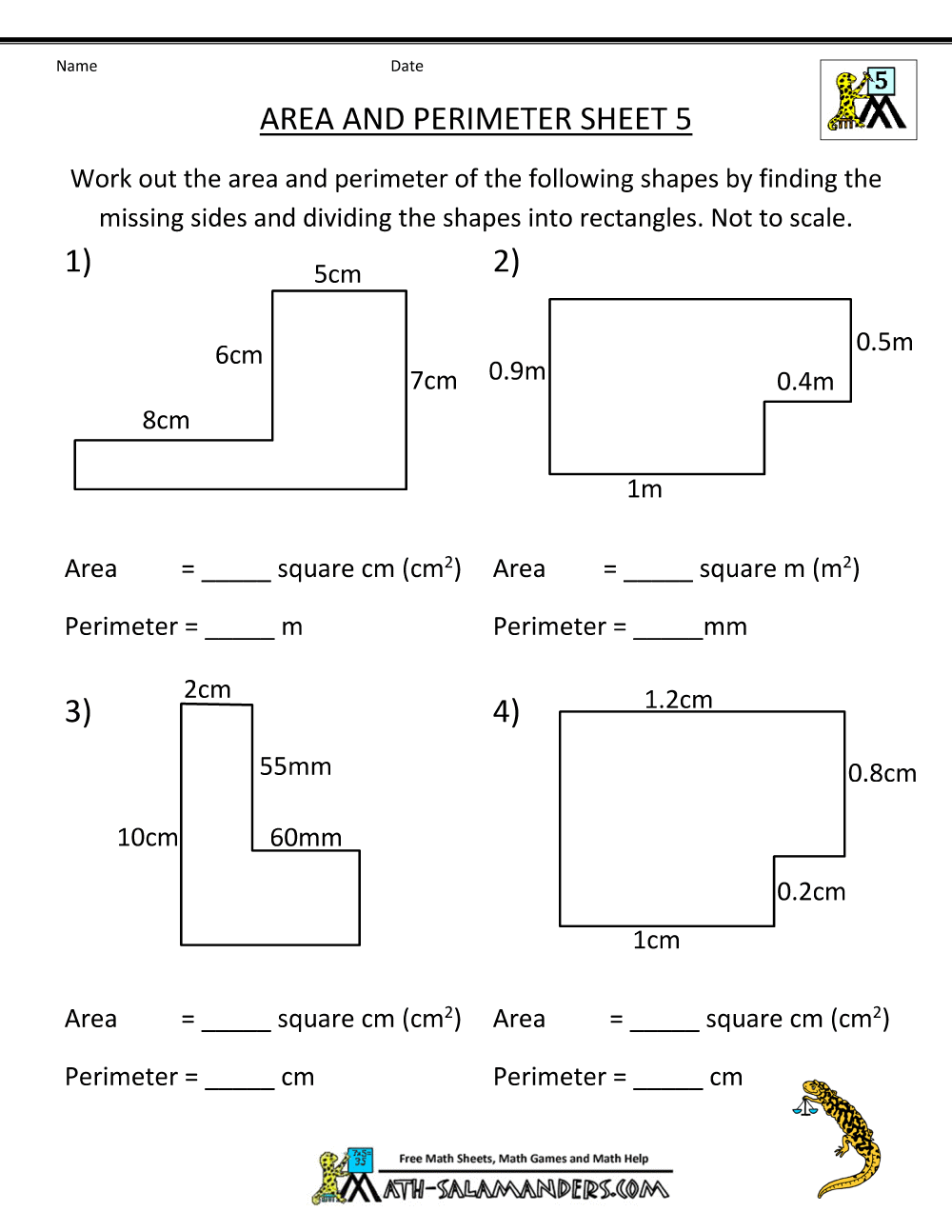
This curated resource addresses the core educational standards for upper-elementary geometry, focusing heavily on perimeter and area class 5 requirements. The exercises guide learners through distinguishing between linear units used for boundaries and square units used for surfaces, preventing common conceptual confusions. Problems progress systematically from direct formula application to missing-dimension calculations, where learners must determine an unknown side length given the total perimeter or area. Additional challenges include composite rectilinear figures that require partitioning complex shapes into simple rectangles, aligning directly with modern Academic curriculum benchmarks.
Key Learning Outcomes
Learners accurately calculate the perimeter of polygons by summing all outer side lengths using standard units like centimeters and meters. Students apply multiplication formulas for rectangles and squares to determine interior surface coverage expressed in square units. Participants successfully solve reverse-engineering problems by deducing missing dimensions when provided with a total perimeter or area measurement. Furthermore, learners partition irregular composite shapes into distinct rectangular regions to compute total area and perimeter efficiently.
Overview & Skill Breakdown
| Focus Area | Target Skill | Best Practice |
|---|---|---|
| Perimeter Computation | Summing outer boundaries of standard polygons | Use grid alignment to trace outer edges accurately |
| Area Calculation | Multiplying length by width using square units | Draw internal grid lines to visualize square units |
| Missing Dimensions | Reverse engineering sides from total measurements | Isolate known variables before applying division |
How to Use This Worksheet
Implementation of this material supports flexible learning environments, whether deployed during traditional classroom instruction, small group interventions, or independent home study sessions. Educators can utilize individual pages as formative assessments, diagnostic tools to identify specific knowledge gaps, or homework assignments that reinforce daily lessons. The layout provides ample workspace for students to record intermediate calculations, sketch diagrams, and label units correctly. Supplementary Worksheet variations accommodate different ability levels within the same classroom setting.
Practical Tips for Success
Preparation involves reviewing foundational multiplication facts and basic unit conversion rules before introducing complex geometric calculations. During execution, encourage learners to underline key measurements and explicitly write out formulas before substituting numerical values to reduce calculation errors. Extension activities can involve measuring real-world objects in the immediate environment, such as tabletops or book covers, to connect abstract formulas to physical reality.
Stage-Appropriate Recommendations
Instructional scaffolding must align with recognized cognitive development milestones, such as the Piagetian stages of concrete and formal operational thought detailed in the American Psychological Association guidelines. Beginners benefit from tactile manipulatives, such as centimeter tiles and geoboards, to physically construct shapes and count interior units before transitioning to abstract arithmetic. Advanced learners should be challenged with scale drawings, algebraic substitution for unknown sides, and optimization problems that explore how varying dimensions affect perimeter while keeping area constant.
Spatial reasoning tasks improve overall mathematical achievement by thirty-five percent when paired with physical manipulatives — National Council of Teachers of Mathematics
Frequently Asked Questions
Explore More Free Printable Resources
Discover a comprehensive library of educational assets, organizational tools, and practice materials designed to support learners at every stage of academic development. Browse the complete collection today at Free Printable For You to find additional math practice pages and teaching aids.
Images References