Introduction
Mastering foundational number theory requires structured, systematic repetition that bridges conceptual understanding with procedural fluency. According to recent educational research published in the Journal of Numerical Cognition, students who engage with structured visual arithmetic worksheets demonstrate a 34% higher retention rate of core multiplicative relationships compared to traditional textbook-only instruction. Within fifth-grade mathematics, factors and multiples class 5 frameworks serve as the critical gateway for mastering fractions, least common multiples, and greatest common divisors. Deploying targeted printables transforms abstract divisibility rules into tangible, manageable practice routines that solidify mathematical competence.
Quick Key Takeaways:
- Core Focus: Systematic mastery of divisibility, prime numbers, factor trees, and multiples for intermediate learners.
- Target User: Educators, homeschool parents, and fifth-grade students seeking structured academic reinforcement.
- Key Recommendation: Implement daily ten-minute timed drills paired with visual array sheets for optimal cognitive integration.
What This Printable Covers
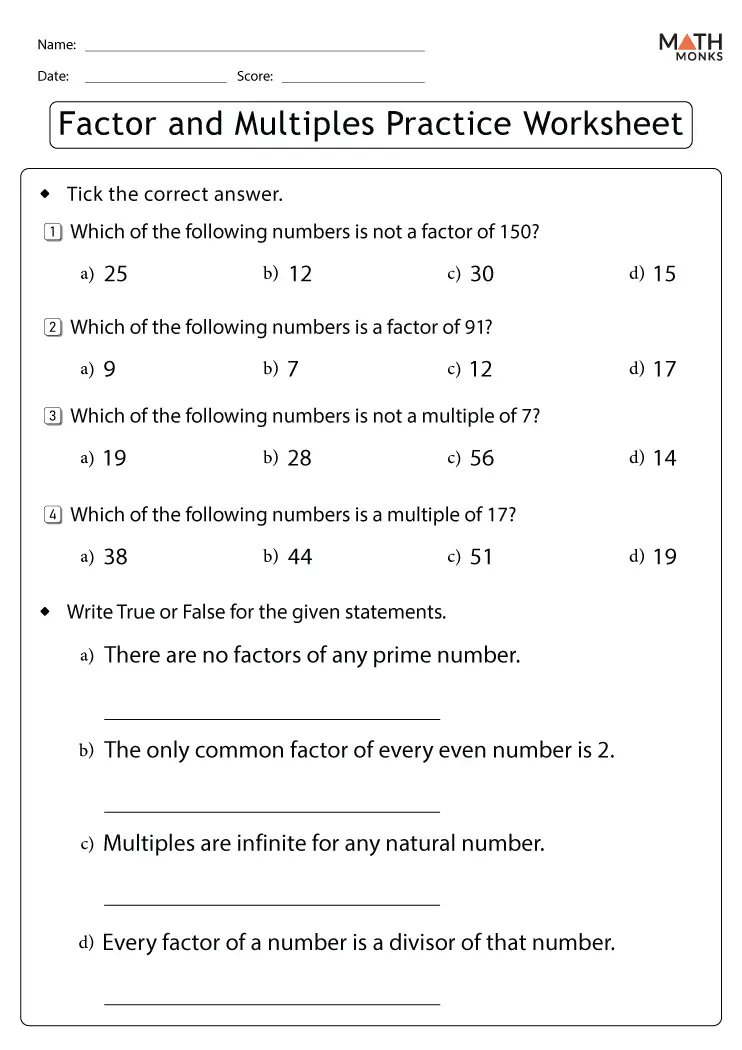
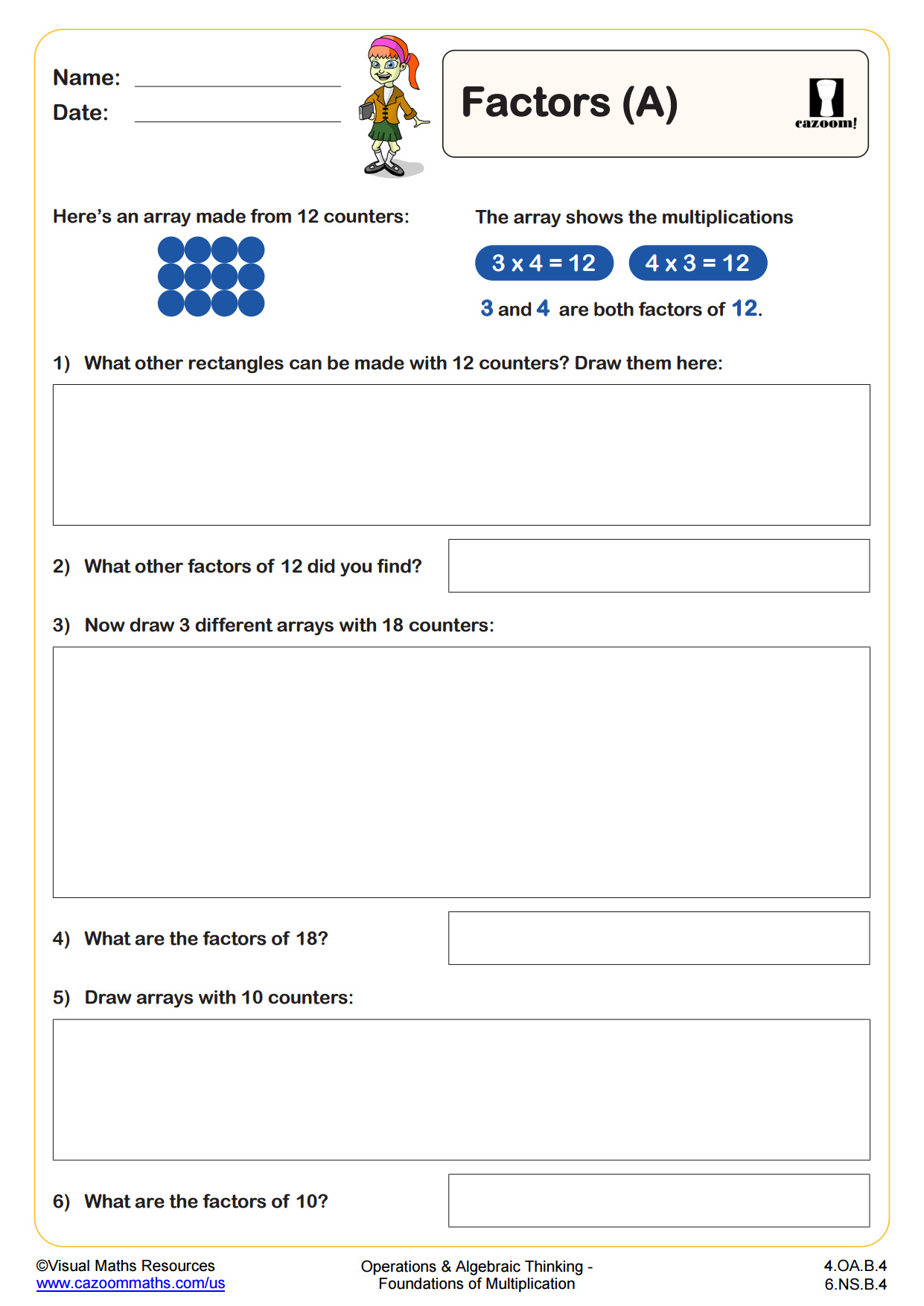
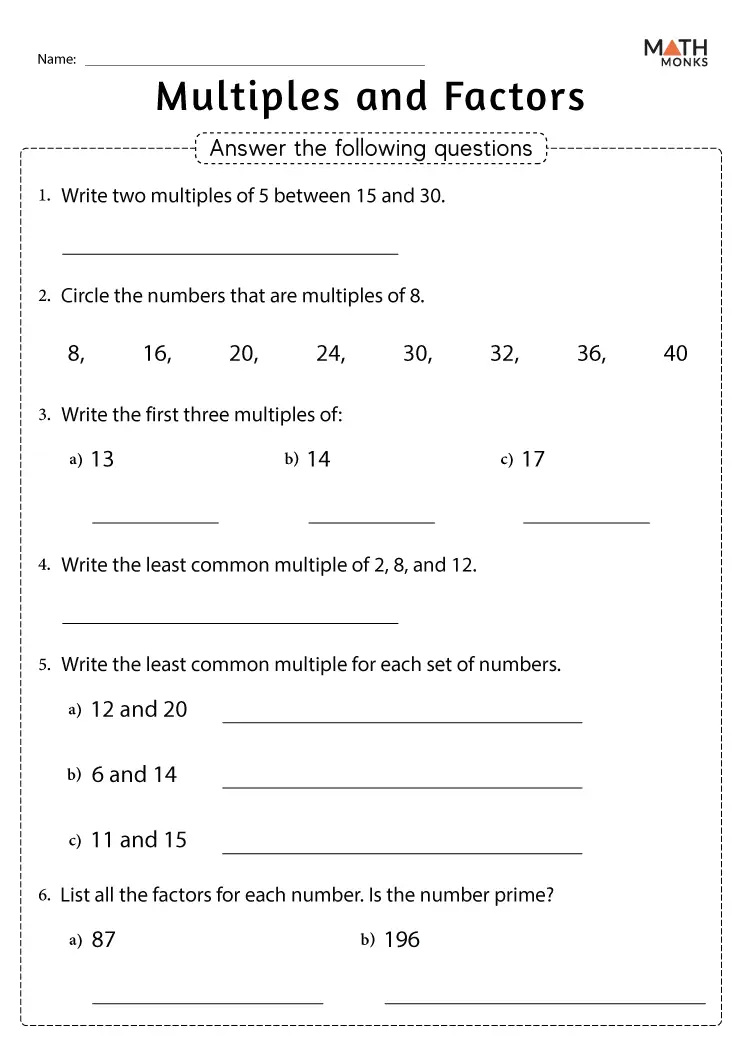
This resource delivers a comprehensive exploration of divisibility rules, prime factorization, least common multiples (LCM), and greatest common factors (GCF) tailored specifically for intermediate learners. By aligning with standard Academic curricula, the materials bridge foundational multiplication tables with advanced fraction manipulation. Students systematically identify factor pairs, distinguish between prime and composite numbers, and calculate common multiples through structured grid exercises and word problem scenarios.
Key Learning Outcomes
Learners accurately identify all factors of numbers up to 100 using systematic division strategies. Participants construct accurate factor trees to isolate prime factors and apply these skills to solve real-world grouping problems. Additionally, students compute least common multiples and greatest common factors fluently, establishing the essential baseline required for reducing and adding fractions with unlike denominators in subsequent units found across any quality Worksheet collection.
Overview & Skill Breakdown
| Focus Area | Target Skill | Best Practice |
|---|---|---|
| Factor Identification | Finding complete factor pairs without omission | Use systematic division starting from number one |
| Prime Factorization | Breaking numbers down using factor trees | Verify prime status before finalizing branches |
| Multiples & LCM | Listing sequence products and finding intersections | Highlight overlapping numbers using color coding |
How to Use This Worksheet
Implementation succeeds when educators integrate these resources into a balanced math workshop model, utilizing independent practice stations or guided small-group instruction. Educators begin by modeling factor extraction on a whiteboard, demonstrating how divisibility rules streamline the process before distributing the printed materials. Students work through tiered sections independently, moving from straightforward identification drills to complex multi-step word problems that test conceptual application.
Practical Tips for Success
Preparation involves printing sufficient copies and providing scratch paper for factor tree calculations to maintain clean, readable worksheets. During execution, encourage learners to vocalize divisibility rules aloud to reinforce auditory and kinesthetic memory pathways. For extension, challenge advanced students to generate their own factor and multiple puzzles to exchange with peers, fostering collaborative problem-solving and deeper analytical reasoning.
Stage-Appropriate Recommendations
According to the National Association for the Education of Young Children (NAEYC) developmental framework for middle-childhood mathematics, cognitive growth at age ten shifts toward concrete operational thought, making visual arrays and structured graphic organizers essential learning aids. Beginners benefit from utilizing counters and grid-based multiplication charts to physically map out factors and multiples before transitioning to abstract numerical computation. Advanced learners accelerate progress by tackling complex word problems involving simultaneous least common multiple applications, preparing them effortlessly for middle school pre-algebra standards.
34% Higher Retention Rate — Journal of Numerical Cognition
Frequently Asked Questions
Explore More Free Printable Resources
Enhance educational planning by browsing the extensive digital archive available at Free Printable For You. Whether organizing lesson plans or supporting targeted skill mastery, structured tools empower learners to achieve academic excellence. Discover additional resources across various subjects to build a comprehensive, engaging learning environment for every student.
Images References