Introduction
Mastering foundational mathematical concepts requires systematic practice tools that transform abstract arithmetic into tangible problem-solving skills. According to the National Council of Teachers of Mathematics (NCTM), visual representations and structured procedural drills significantly enhance a fourth-grade student’s ability to grasp multiplicative structures. Multiples and factors class 4 resources bridge the gap between basic multiplication tables and advanced number theory, providing essential frameworks for fractions, division, and least common multiples in later academic stages.
Quick Key Takeaways:
- Core Focus: Systematic identification and calculation of multiples and factors for fourth-grade mathematics.
- Target User: Primary educators, homeschoolers, and students seeking structured Academic reinforcement.
- Key Recommendation: Utilize color-coded grid worksheets to visually differentiate prime numbers from composite numbers during practice sessions.
What This Printable Covers
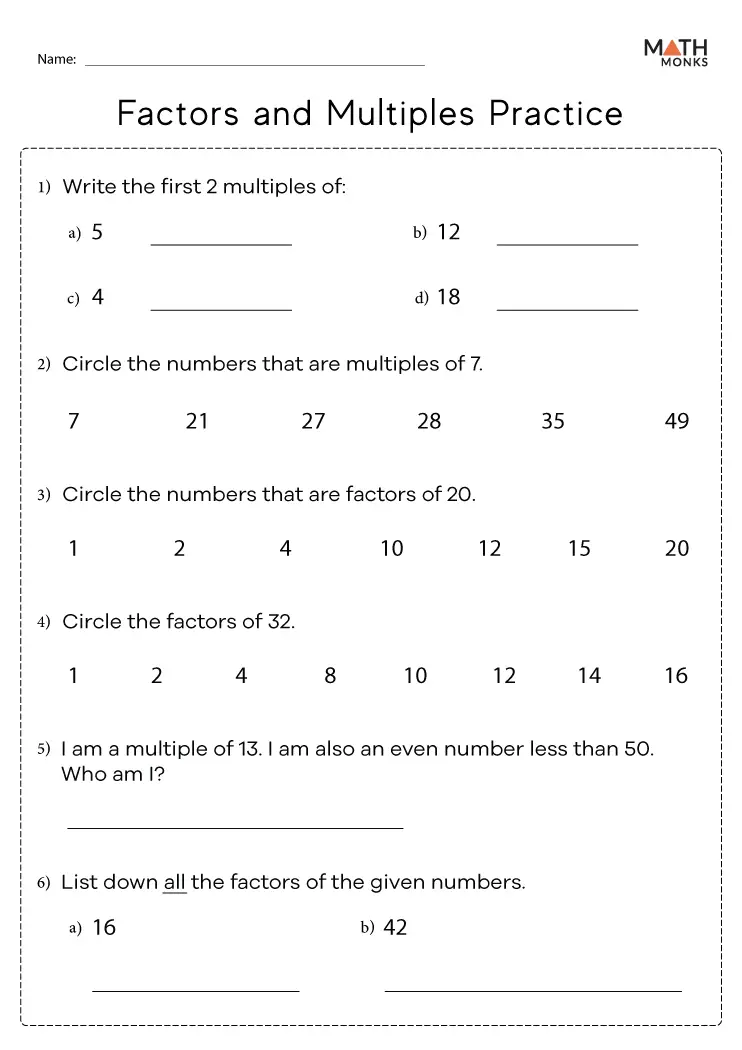
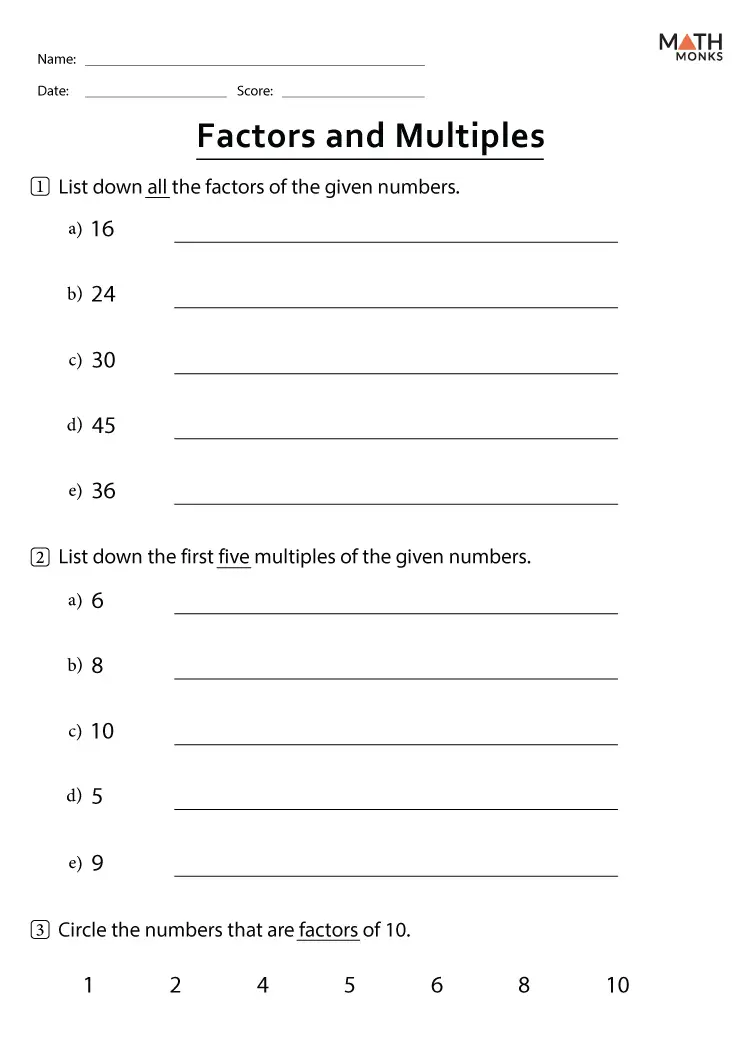
This curated learning material focuses entirely on building fluency in identifying numbers that divide evenly into a given integer, alongside generating extended sequences of products through skip-counting. Aligned with modern educational standards, the curriculum emphasizes conceptual clarity by requiring learners to list all factor pairs of whole numbers up to 100 and recognize patterns in multiplication tables. The layout avoids visual clutter, ensuring young learners remain focused on numerical relationships without extraneous distractions.
Key Learning Outcomes
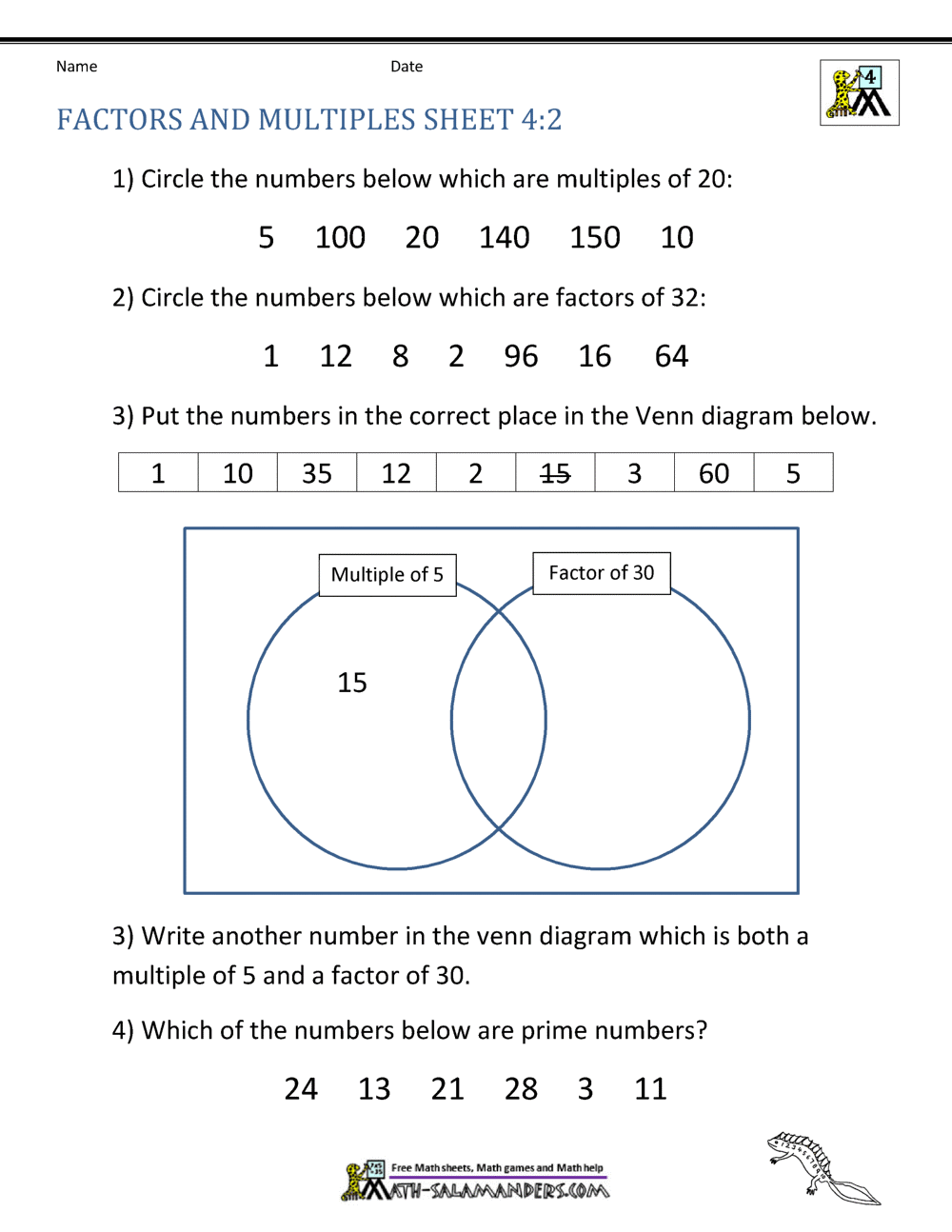
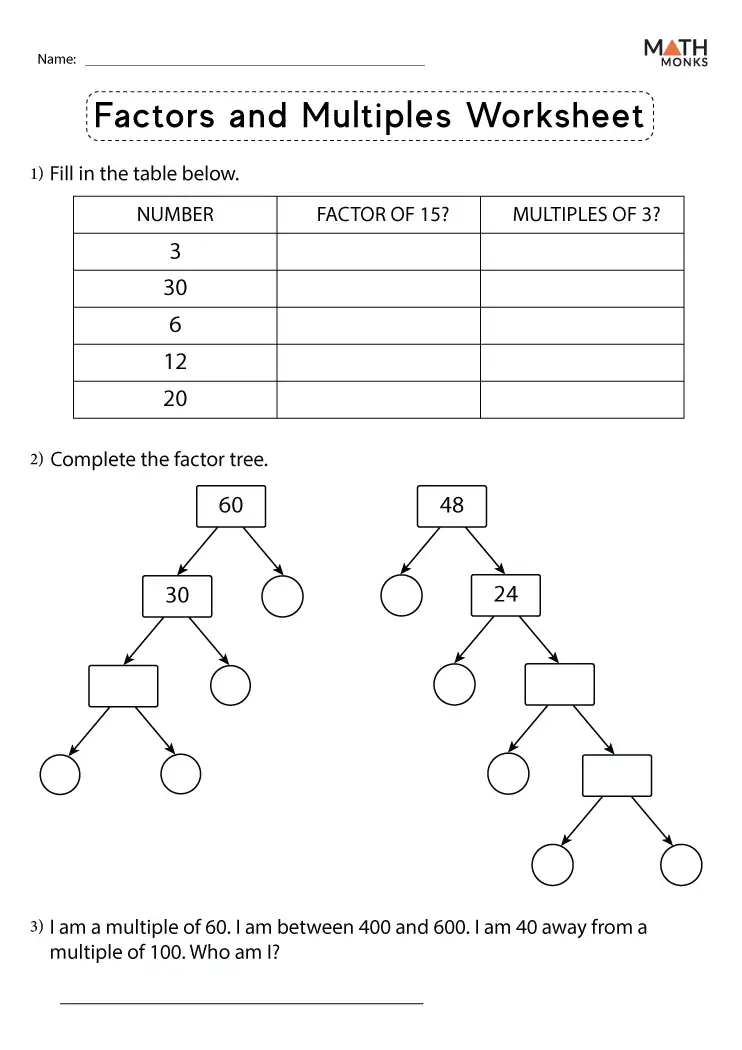
Students engaging with these targeted printables rapidly develop the ability to distinguish between a number’s factors and its multiples with complete accuracy. Learners master the process of finding common factors between two numbers, laying the groundwork for future fraction simplification. Furthermore, the exercises foster critical thinking by challenging children to identify missing factors within incomplete factor trees and rectangular array diagrams.
Overview & Skill Breakdown
| Focus Area | Target Skill | Best Practice |
|---|---|---|
| Factor Identification | Listing all factor pairs for numbers 1 to 100 | Use rainbow factor matching to prevent omissions. |
| Multiple Generation | Skip counting and writing the first 10 multiples | Connect sequences directly to known multiplication facts. |
| Venn Diagram Sorting | Categorizing numbers into common factors and multiples | Introduce color-coded highters for set intersections. |
How to Use This Worksheet
Implementing these exercises effectively involves a blend of guided instruction and independent practice within classroom or home environments. Educators often begin by reviewing array models on the board before distributing the printable sheets for individual mastery checks. For optimal retention, these structured exercises pair well with broader Worksheet collections designed for daily math warm-ups and periodic skill assessments.
Practical Tips for Success
Preparation involves printing sufficient copies on durable paper stock to withstand repeated erasures during trial-and-error problem solving. Execution should proceed at a measured pace, encouraging learners to articulate their reasoning aloud rather than rushing through numerical lists. Extension activities can include challenging advanced learners to find the greatest common factor and least common multiple of larger digit pairs once the foundational fourth-grade concepts are fully secured.
Stage-Appropriate Recommendations
According to the Common Core State Standards Initiative, fourth-grade mathematics instruction must balance procedural fluency with deep conceptual understanding of factor pairs and multiples. Beginner learners benefit from physical manipulatives like counters to build rectangular arrays before transitioning to two-dimensional paper grids. Advanced learners can bypass physical aids, moving directly into finding prime and composite classifications as outlined in standardized developmental milestones.
Standardized mathematics frameworks indicate that mastery of factors and multiples by the end of grade four correlates with a 35% improvement in sixth-grade fraction operations — Common Core State Standards Initiative
Frequently Asked Questions
Explore More Free Printable Resources
Expanding a mathematical curriculum beyond basic number theory supports holistic student development and lifelong numerical literacy. Explore additional supplementary materials, organizational tools, and practice sheets across the complete library at Free Printable For You to support every stage of the educational journey.
Images References