Introduction
Punctuation for class 1 introduces foundational mechanics of written communication by teaching young learners how terminal marks signal pauses and sentence boundaries. According to a study published by the National Institute of Child Health and Human Development, explicit instruction in early grammar structures significantly accelerates reading fluency and comprehension skills among six-year-old learners. Establishing correct punctuation habits early prevents common literacy hurdles, ensuring students transition smoothly from simple word recognition to structured sentence composition. Mastery of basic stops, questions, and exclamations forms the bedrock of clear written expression across all primary educational curricula. Related guide: Teaching Articles.
Quick Key Takeaways:
- Core Focus: Fundamental introduction of periods, question marks, and exclamation points for first-grade students.
- Target User: Primary school educators and parents seeking structured early literacy reinforcement tools.
- Key Recommendation: Pair visual storytelling exercises with printable tracing practice for optimal symbol retention.
What This Printable Covers
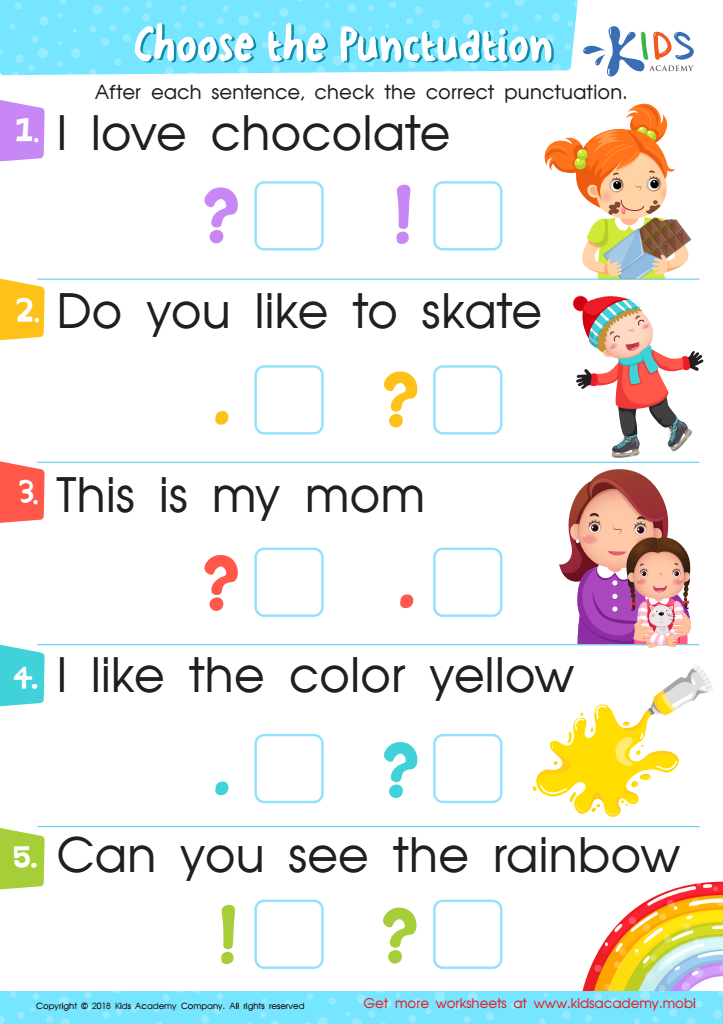
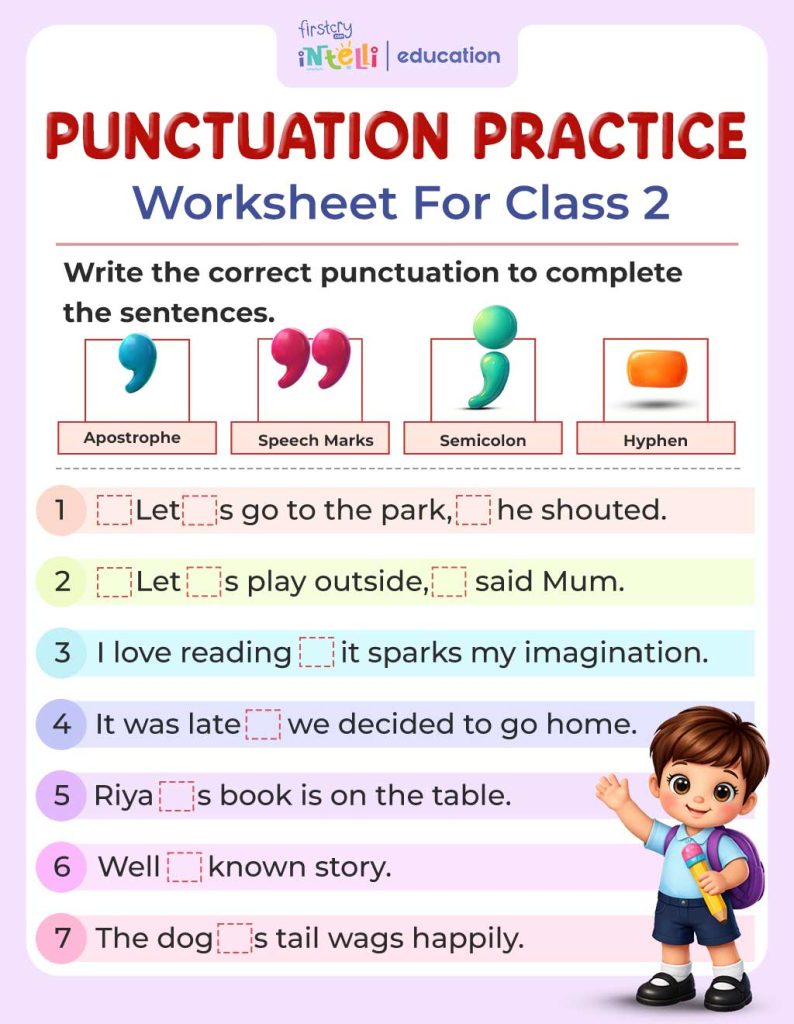
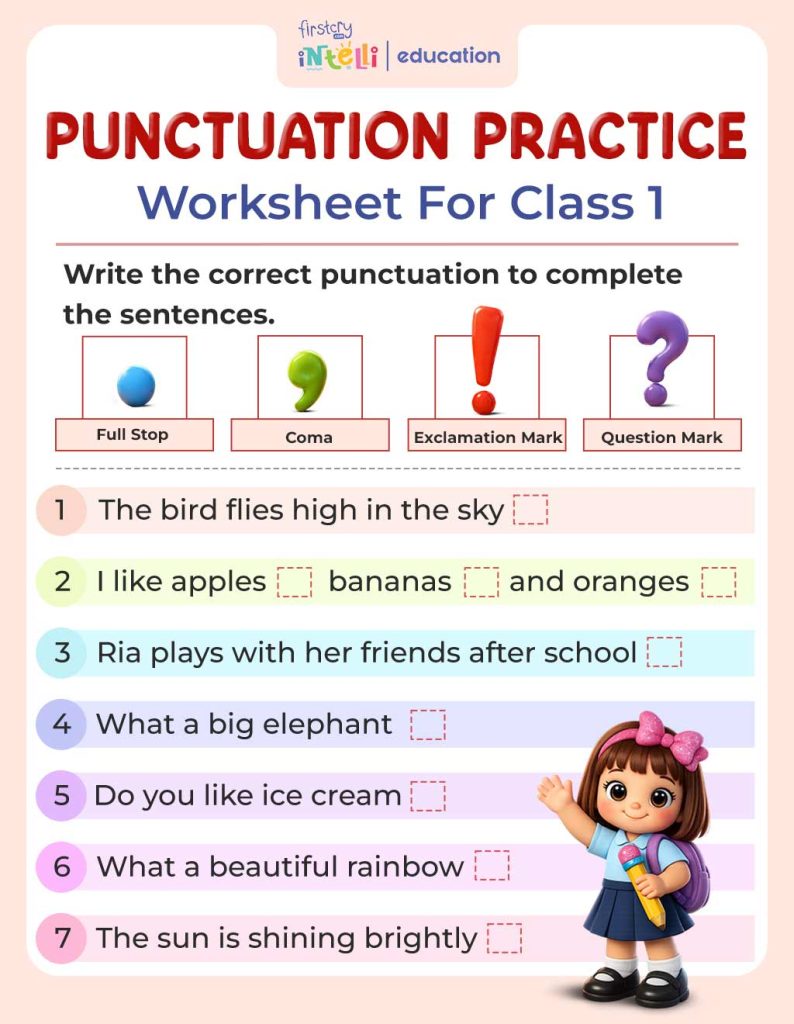
Structured punctuation for class 1 printables focus on identifying, tracing, and correctly placing terminal punctuation marks within elementary sentences. The curriculum aligns with foundational Early Learning standards to support cognitive development and fine motor skills. Learners examine short declarative sentences, interrogative questions, and expressive statements, determining which symbol belongs at the conclusion of each thought. By isolating each punctuation type, instructional materials reduce cognitive overload and encourage targeted practice.
Key Learning Outcomes
Students successfully differentiate between a statement requiring a period and an inquisitive phrase demanding a question mark. Learners develop the ability to read simple sentences with appropriate vocal inflection dictated by terminal marks. Furthermore, the exercises strengthen pencil control through guided tracing of dots, curves, and vertical lines, bridging the gap between mechanical handwriting and grammatical comprehension.
Overview & Skill Breakdown
| Focus Area | Target Skill | Best Practice |
|---|---|---|
| Periods | Identifying telling sentences | Read aloud to emphasize the natural dropping of the voice. |
| Question Marks | Recognizing asking sentences | Practice rising intonation patterns before writing the symbol. |
| Exclamation Points | Expressing strong emotion | Connect the mark to exciting real-life events or stories. |
How to Use This Worksheet
Implementing these resources requires a balanced approach combining verbal reading and written application. Educators and parents can introduce Academic printable sets during morning literacy rotations or focused homework sessions. Instruct learners to read each sentence aloud before deciding which punctuation mark to draw. This auditory cueing reinforces the functional purpose of grammar rather than treating punctuation as a random exercise.
Practical Tips for Success
Preparation involves printing high-contrast copies and gathering colored pencils to make tracing engaging for young children. During execution, encourage students to exaggerate their vocal inflections when encountering different terminal marks to build a strong mind-body connection with the punctuation. For extension activities, invite learners to invent their own sentences based on favorite storybook characters and apply the correct ending marks independently.
Stage-Appropriate Recommendations
Supporting developmental milestones in literacy requires adherence to recognized professional guidelines. According to the National Association for the Education of Young Children (NAEYC), kindergarten and first-grade literacy materials must integrate multi-sensory approaches that combine visual symbol recognition with physical writing practice. Beginner learners should start with heavy-lined tracing sheets featuring isolated periods and question marks before moving to mixed review pages. Advanced students can tackle short paragraph editing tasks where missing punctuation must be identified and inserted without direct prompting.
Multi-sensory literacy instruction improves symbol retention by up to 45% in early primary learners — National Association for the Education of Young Children (NAEYC)
Frequently Asked Questions
Explore More Free Printable Resources
Discover a comprehensive library of supportive materials designed to enhance foundational skill-building at home and in the classroom. From targeted Worksheet collections to organizational templates found in Administrative categories, every tool is crafted to support lifelong educational success. Visit Free Printable For You today to access completely free resources for learners of all ages.
Images References