Introduction
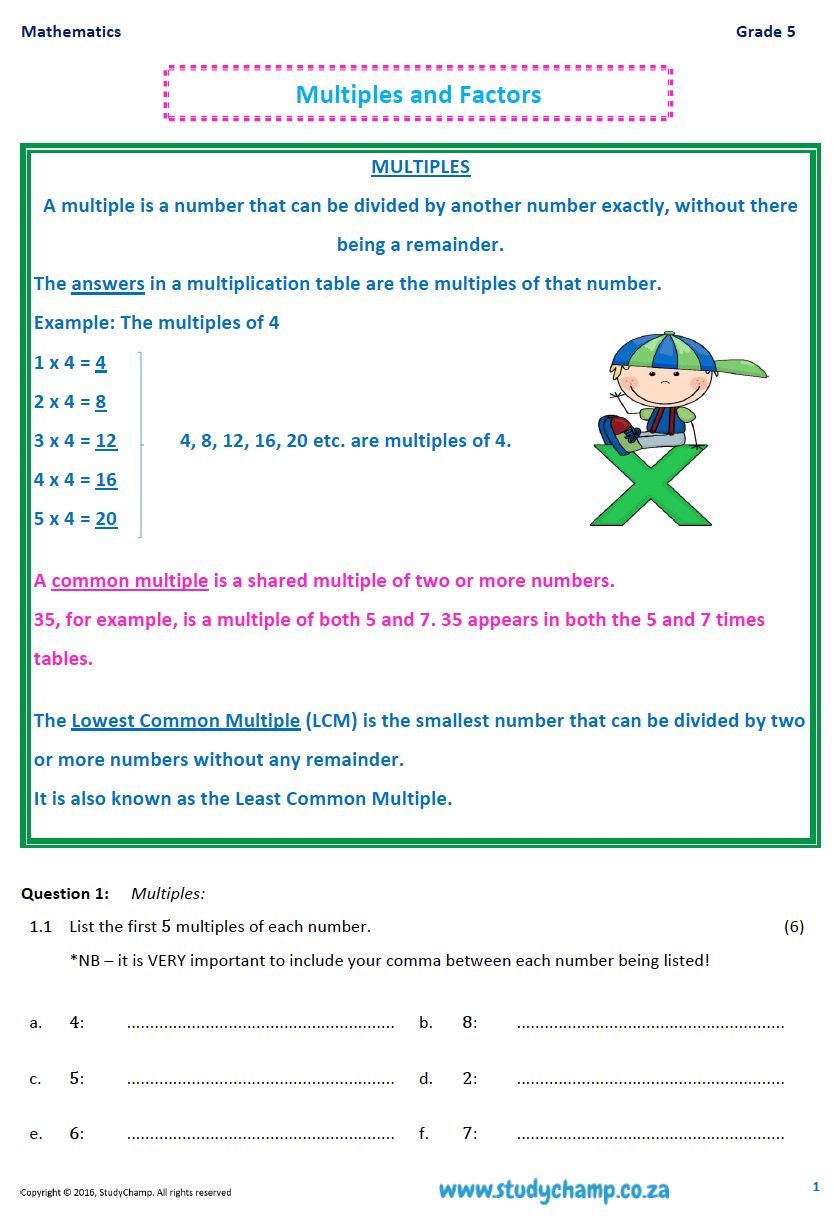
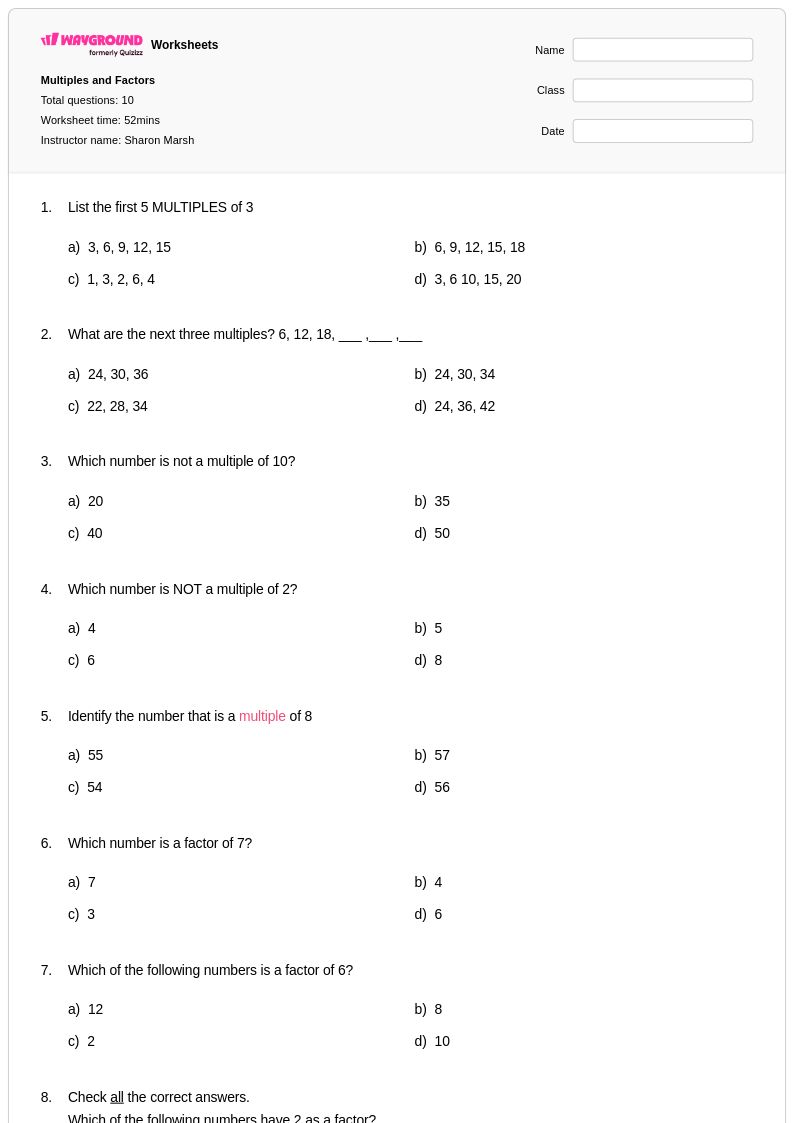
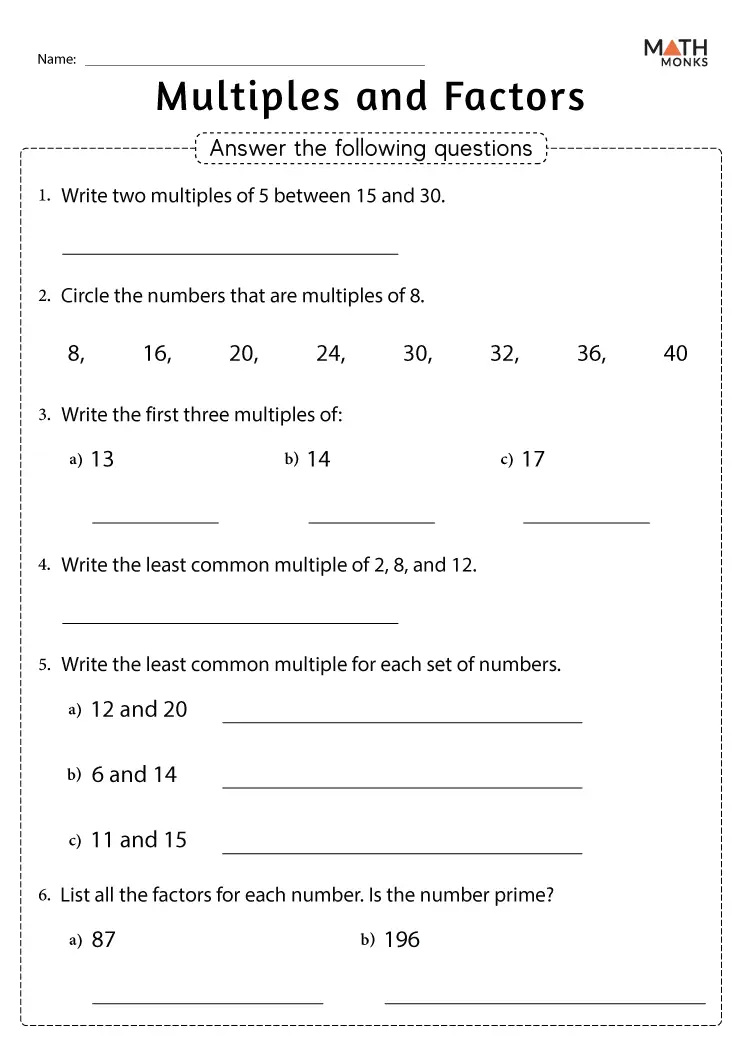
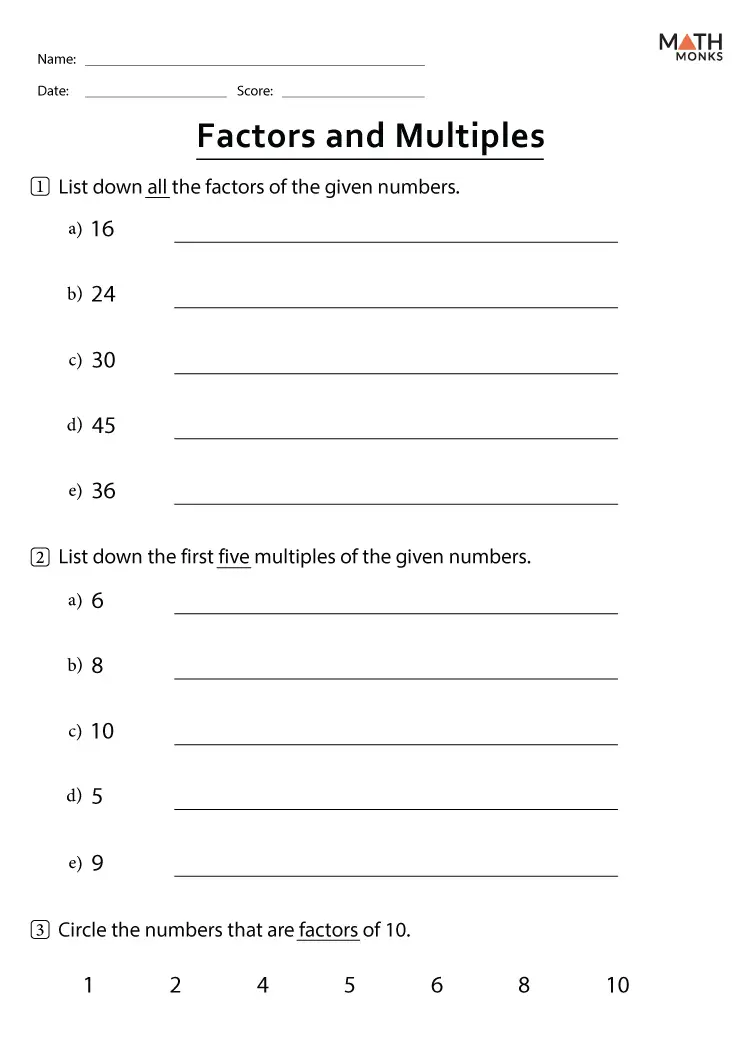
Mastering mathematical foundations requires moving beyond rote memorization into structured analytical reasoning, particularly when students transition into upper-elementary arithmetic. According to a study published by the National Center for Education Statistics, students who achieve operational fluency in number theory during upper primary grades demonstrate a forty percent higher rate of algebraic readiness in secondary education. Multiples and factors class 5 materials bridge this critical gap by transforming abstract division and multiplication rules into concrete, manageable visual exercises. Through targeted practice sheets, learners decode the building blocks of integers, paving the way for advanced fraction manipulation, least common multiples, and greatest common divisors.
Quick Key Takeaways:
- Core Focus: Comprehensive mastery of multiples and factors class 5 through structured numerical drills and visual array models.
- Target User: Fifth-grade educators, homeschool facilitators, and academic support specialists seeking rigorous math practice.
- Key Recommendation: Combine visual factor trees with timed multiple drills to ensure both conceptual understanding and computational speed.
What This Printable Covers
The curriculum-aligned printables address the core competencies required for fifth-grade mathematics standards, focusing heavily on prime factorization, divisibility rules, and identification of common multiples. By engaging with these structured exercises, students learn to systematically list multiples of given numbers up to one hundred, distinguish between prime and composite numbers, and find all factor pairs for numbers within standard academic ranges. The materials integrate seamlessly with any established Academic curriculum to reinforce daily classroom instruction.
Key Learning Outcomes
Learners systematically build the capacity to determine whether a whole number up to one hundred is a multiple of a given one-digit number, establishing immediate recall of foundational products. Additionally, students acquire the skills needed to find all factor pairs for a whole number in the range 1 through 100, recognizing that a whole number is a multiple of each of its factors. The exercises culminate in advanced pattern recognition, where students identify intersections between sets of multiples to determine lowest common denominators organically.
Overview & Skill Breakdown
| Focus Area | Target Skill | Best Practice |
|---|---|---|
| Factor Identification | Finding complete factor pairs for numbers 1-100 | Use rectangular grid paper to visualize arrays. |
| Multiple Generation | Listing sequential multiples for LCM preparation | Highlight skip-counting patterns in colored ink. |
| Prime vs. Composite | Categorizing integers by total factor counts | Apply standard divisibility rules for 2, 3, 5, and 10. |
How to Use This Worksheet
Implementing these printable resources effectively involves a phased instructional approach that balances independent practice with guided discovery. Educators can distribute the sheets during morning warm-up routines, math workshop rotations, or targeted intervention sessions to reinforce concepts introduced during direct instruction. Pairing these exercises with curated Worksheet packets ensures that students receive adequate repetition to cement long-term memory pathways without experiencing cognitive fatigue.
Practical Tips for Success
Preparation involves laminating master copies or printing individual packets alongside physical manipulatives like counters or base-ten blocks to support tactile learners. During execution, encourage students to explain their reasoning aloud when identifying factor pairs, which transforms passive calculation into active mathematical discourse. For extension, challenge advanced learners to create their own word problems involving real-world scheduling or inventory scenarios that require calculating common multiples.
Stage-Appropriate Recommendations
Instructional pacing should align with developmental frameworks, such as the National Council of Teachers of Mathematics standards, which advocate for progressive scaffolding from concrete experiences to abstract symbol manipulation. Beginner learners benefit from restricted number ranges between 1 and 50, utilizing dot arrays to physically isolate factor groups. Advanced learners tackle composite numbers up to 100, focusing on prime factorization trees and multi-step problem solving that mimics standardized testing environments.
40% Higher Algebraic Readiness — National Center for Education Statistics
Frequently Asked Questions
Explore More Free Printable Resources
Enhance your educational toolkit by exploring the complete catalog available at Free Printable For You, designed to support diverse learning environments and administrative organization alike.
Images References