Introduction
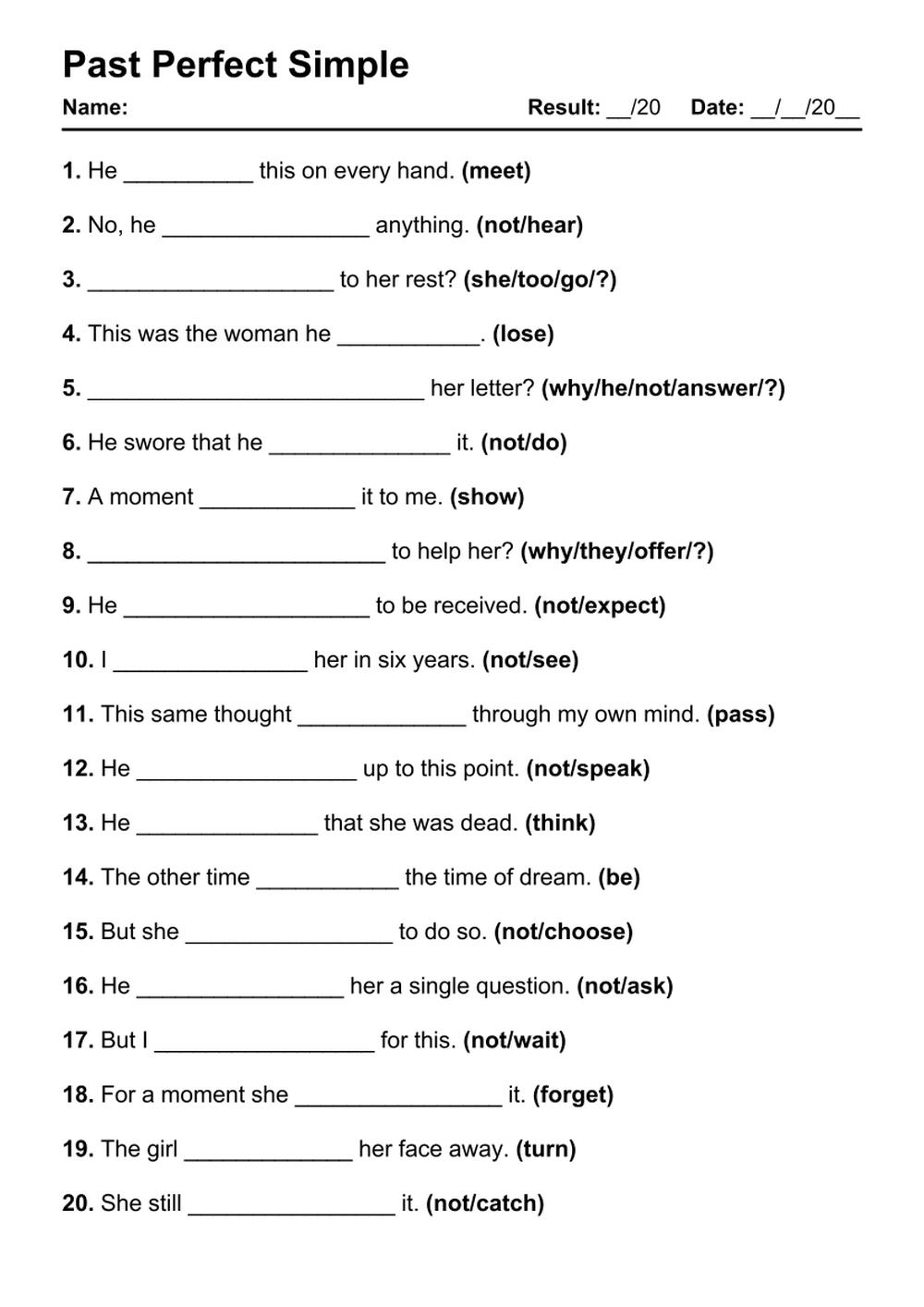
Mastering advanced verb tenses requires targeted grammatical repetition, making a past perfect exercises pdf an essential resource for clarifying chronological relationships between past actions. According to cognitive linguistic research published by the American Psychological Association, structured syntax drills significantly enhance working memory retention and grammatical accuracy during complex language processing tasks. Utilizing a dedicated past perfect exercises pdf bridges the gap between theoretical grammar rules and fluid written execution by isolating the “had + past participle” structure. Educators and learners rely on structured Academic resources to systematically diagnose and correct common tense confusion errors in formal compositions.
Quick Key Takeaways:
- Core Focus: A past perfect exercises pdf provides systematic practice for structuring completed past actions preceding other events.
- Target User: Upper-intermediate language learners, educators, and curriculum designers seeking structured grammar reinforcement.
- Key Recommendation: Pair gap-fill drills with sentence-combining tasks to build contextual mastery.
What This Printable Covers
Grammar practice materials specifically target the mechanics of sequencing past events, ensuring learners can accurately distinguish between simple past narratives and prior completed milestones. Exercises typically encompass sentence transformations, chronological ordering, and negative or interrogative restructuring to ensure comprehensive structural comprehension. Aligning with contemporary Worksheet standards, these instructional pages offer scaffolded difficulty levels that accommodate diverse pacing requirements in both self-directed study and traditional classroom environments. Learners systematically examine time markers such as “before,” “by the time,” and “already” to govern proper verb placement.
Key Learning Outcomes
Completing these targeted verb drills enables participants to construct complex sentences with grammatical precision. Learners successfully identify primary past actions and secondary background events within narrative texts. Furthermore, users eliminate ambiguity in written timelines by correctly applying auxiliary verbs alongside irregular past participles. Ultimately, consistent practice elevates formal writing competence across diverse Personal Growth and professional documentation endeavors.
Overview & Skill Breakdown
| Focus Area | Target Skill | Best Practice |
|---|---|---|
| Chronology | Distinguishing past events | Analyze time markers first |
| Conjugation | Mastering irregular participles | Use reference charts during initial drills |
| Syntax | Building complex sentences | Combine independent and dependent clauses |
How to Use This Worksheet
Effective deployment of grammar printables involves initial diagnostic testing followed by targeted skill reinforcement and creative application. Instructors often distribute these pages as pre-assessment tools to gauge baseline comprehension before introducing narrative writing units. In independent study settings, learners benefit from reviewing answer keys immediately after completion to correct misconceptions in real time. Incorporating these structured templates into weekly study routines ensures steady progression from mechanical recognition to intuitive composition. Related guide: Teacher Badge Template.
Practical Tips for Success
Preparation involves reviewing foundational simple past tense rules to ensure learners recognize base participles before tackling compound structures. During execution, encourage students to underline temporal conjunctions within the prompt sentences to visually isolate the sequence of events. Extension activities should challenge learners to draft original paragraphs describing personal experiences using at least three distinct past perfect constructions.
Stage-Appropriate Recommendations
According to the Common European Framework of Reference for Languages (CEFR), mastering the past perfect tense typically aligns with B2 upper-intermediate milestones. Early-stage practitioners should begin with controlled gap-fill activities that explicitly highlight time markers, while advanced learners thrive on open-ended narrative prompts requiring nuanced tense shifting. Structured progression guarantees that foundational syntax rules become second nature before transitioning to abstract literary analysis or professional reporting.
CEFR B2 Framework Standard: — Common European Framework of Reference for Languages
Frequently Asked Questions
Explore More Free Printable Resources
Discover an extensive library of educational materials designed to support every learning milestone. Whether refining language mechanics or organizing daily schedules, Free Printable For You offers high-quality tools to elevate educational and professional journeys.
Images References