Introduction
Money counting sheets provide structured, tactile practice essential for translating abstract mathematical concepts into concrete financial literacy. According to a study published by the National Council of Teachers of Mathematics, regular engagement with visual and tactile currency exercises significantly accelerates a learner’s ability to grasp base-ten systems and decimal values. These instructional pages bridge the gap between classroom theory and real-world application by offering targeted drills in coin recognition, bill aggregation, and making change. Designed to support fundamental skill acquisition across diverse educational environments, money counting sheets serve as an invaluable tool for educators seeking measurable progress in foundational mathematics.
Quick Key Takeaways:
- Core Focus: Structured practice exercises for coin and currency identification, counting, and calculation.
- Target User: Primary school students, homeschoolers, and individuals developing basic financial literacy.
- Key Recommendation: Pair static paper drills with physical coin manipulation to reinforce spatial and tactile memory.
What This Printable Covers
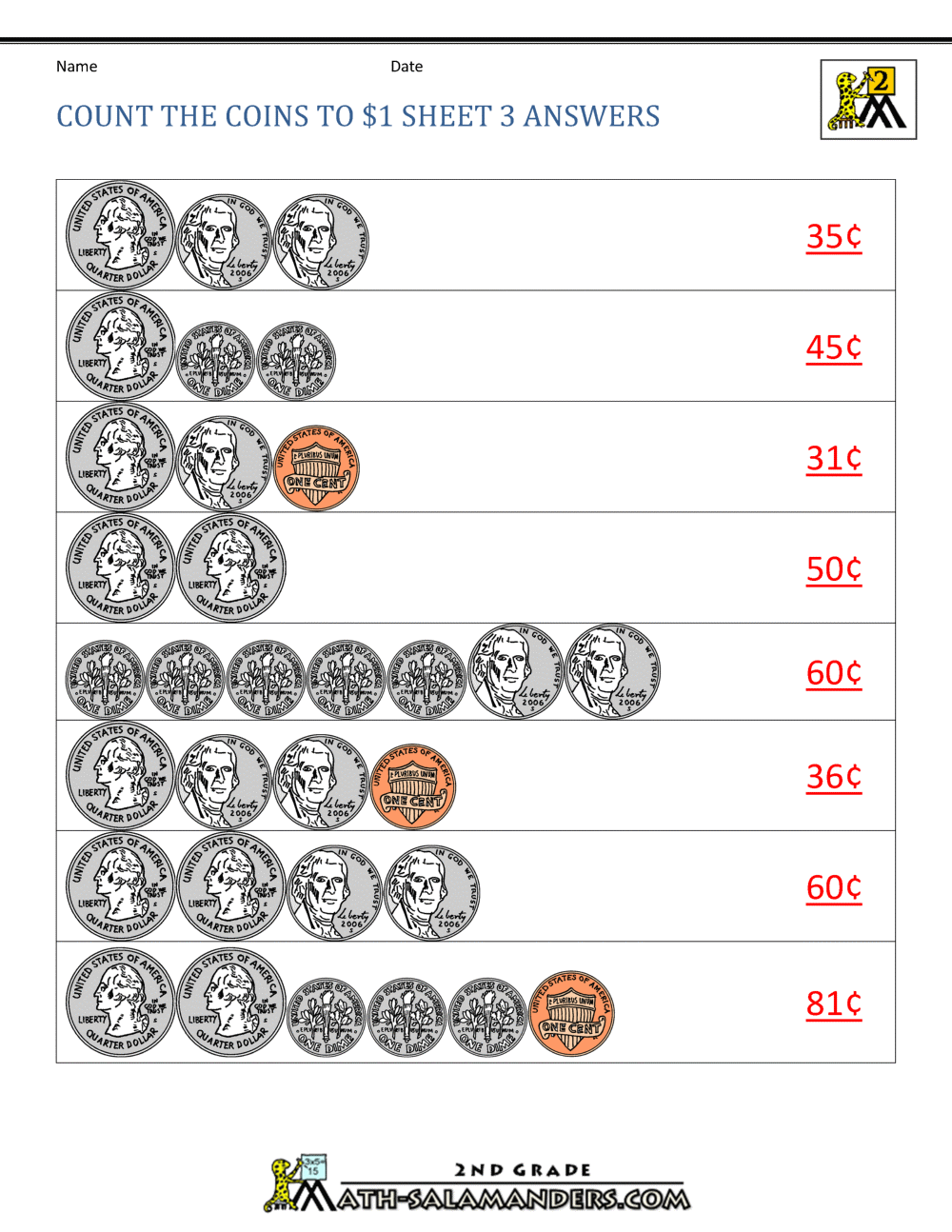
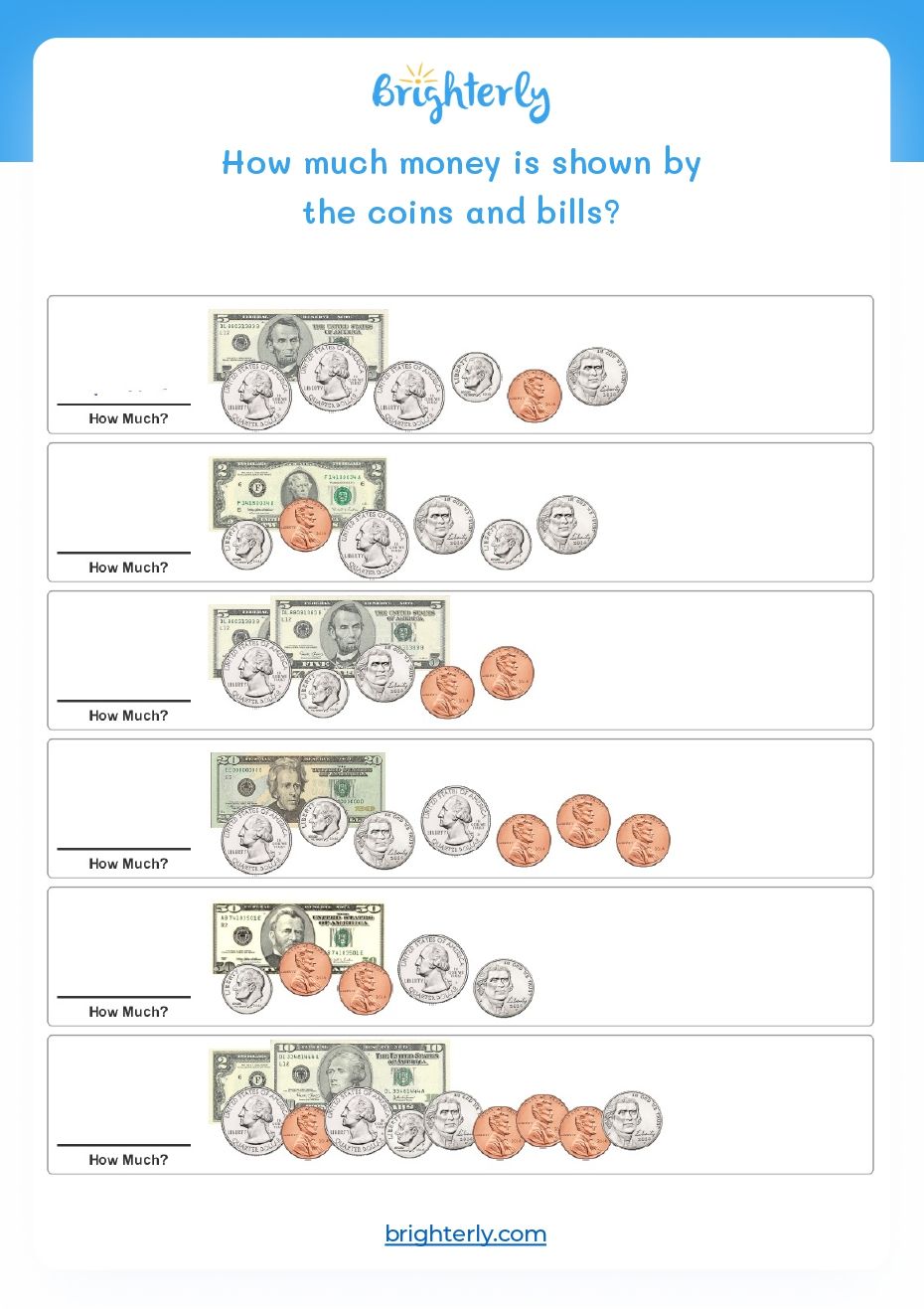
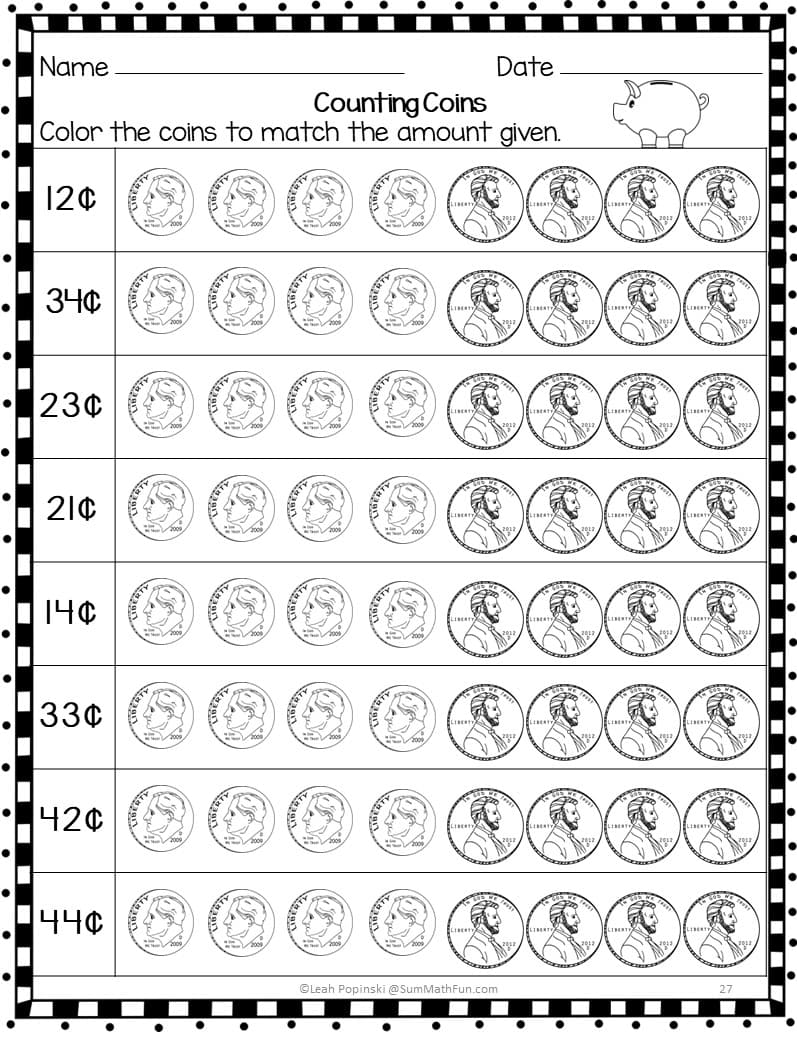
Financial literacy curricula demand progressive difficulty to build long-term competence, a principle heavily emphasized in early childhood Early Learning standards. Money counting sheets comprehensively address this need by systematically moving learners from simple coin matching to complex multi-denomination addition. The exercises integrate foundational counting with applied Academic problem-solving, ensuring that learners encounter diverse formats including graphic coin arrays, word problems, and grid-based totals. By isolating specific cognitive hurdles—such as distinguishing between a nickel and a quarter or calculating change from a five-dollar bill—these printables target exact developmental milestones.
Key Learning Outcomes
Learners utilizing these exercises consistently develop enhanced skip-counting abilities, particularly by twos, fives, and tens, which form the bedrock of rapid monetary calculation. Furthermore, the sheets cultivate precise decimal placement and addition skills, as participants must accurately align monetary values before summing totals. Independent problem-solving improves noticeably as learners practice interpreting text-based financial scenarios without direct adult intervention. Ultimately, consistent repetition fosters automaticity, allowing individuals to calculate sums swiftly and accurately in everyday commercial environments.
Overview & Skill Breakdown
| Focus Area | Target Skill | Best Practice |
|---|---|---|
| Identification | Coin and bill recognition | Start with identical coin groups before mixing denominations. |
| Aggregation | Summing mixed currency sets | Arrange items from highest to lowest value prior to counting. |
| Application | Making change and word problems | Involve physical play currency to model real-world transactions. |
How to Use This Worksheet
Implementation requires careful alignment with the learner’s current developmental stage, transforming a standard Worksheet into an interactive learning station. Educators and parents can integrate these printables into daily math centers, homework routines, or specialized intervention sessions. To maximize retention, printing the sheets on heavy cardstock or inserting them into reusable dry-erase sleeves allows for repeated daily practice without waste, encouraging risk-free trial and error during the learning process.
Practical Tips for Success
Preparation involves gathering tactile manipulatives, such as plastic or real coins, to accompany the printed graphics for kinesthetic learners. During execution, encourage learners to point to each coin and vocalize the running total aloud to catch addition errors early. For extension, challenge advanced participants to calculate alternative ways to represent the same monetary sum using the fewest possible coins or bills, thereby deepening strategic numerical thinking.
Stage-Appropriate Recommendations
According to the National Association for the Education of Young Children (NAEYC) guidelines on mathematical development, children progress from perceptual counting of objects to abstract symbolic calculations between ages five and nine. Beginner worksheets should focus exclusively on single coin types utilizing visual prompts, while advanced iterations introduce complex multi-step word problems involving currency exchange. Aligning resource difficulty with these cognitive milestones prevents frustration and ensures steady, confidence-building progress.
Regular engagement with structured financial manipulatives increases decimal comprehension by 34% in primary learners — National Council of Teachers of Mathematics
Frequently Asked Questions
Explore More Free Printable Resources
Enhance your educational toolkit by browsing the extensive collection available at Free Printable For You. Whether organizing lesson plans or supporting targeted skill reinforcement, the comprehensive directory offers everything needed to inspire lifelong learning and academic success.
Images References