Introduction
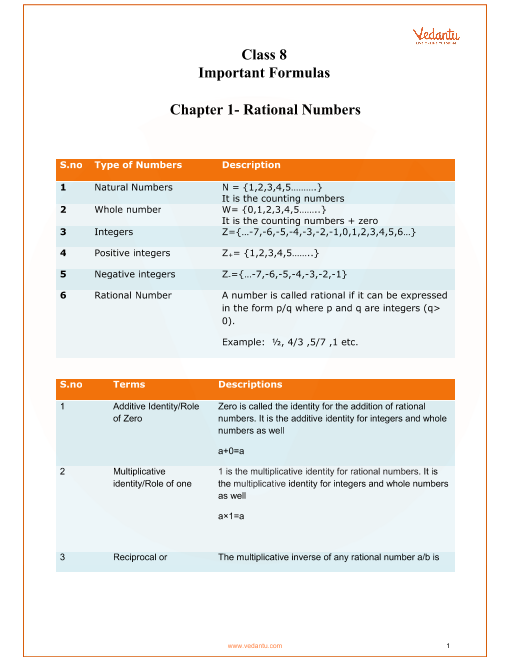
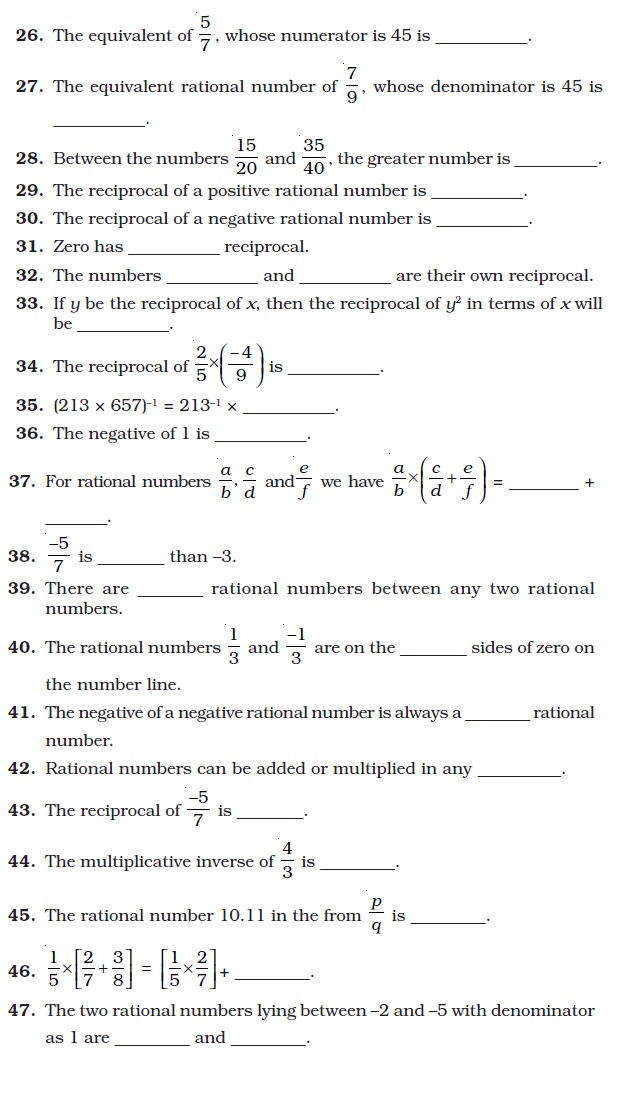
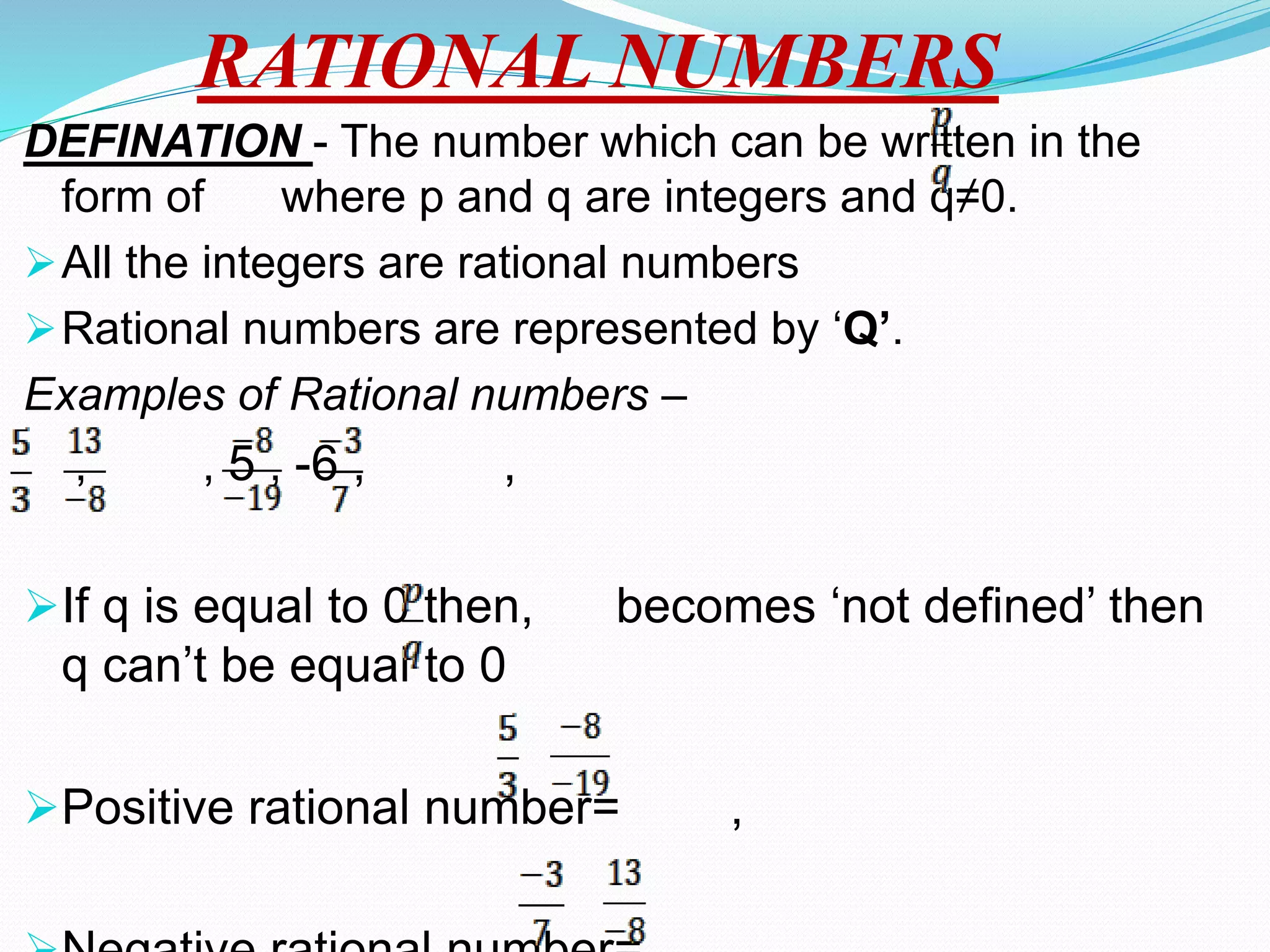
Rational number class 8 curriculum focuses on expanding students’ numerical fluency beyond integers into the dense realm of fractions and terminating or repeating decimals. Structured mathematical practice and organized study materials are essential for mastering abstract algebraic concepts. According to the National Center for Education Statistics, students who consistently engage with structured math problem sets demonstrate a 22 percent higher retention rate of core number-property concepts compared to those relying solely on textbook reading. Mastering rational number class 8 provides the foundational framework required for advanced equations, inequalities, and real-world proportional reasoning.
Quick Key Takeaways:
- Core Focus: Comprehensive mastery of properties, operations, and number-line representations in rational number class 8.
- Target User: Eighth-grade educators, homeschoolers, and middle school mathematics students seeking rigorous academic practice.
- Key Recommendation: Integrate daily scaffolded problem sets alongside visual number line mapping to reinforce conceptual understanding.
What This Printable Covers
This educational resource provides a thorough exploration of rational numbers, guiding learners through closure, commutativity, associativity, and the distributive property across addition, subtraction, multiplication, and division. The material bridges basic fraction arithmetic with advanced algebraic thinking, ensuring students understand additive inverses, multiplicative inverses, and the density property of rational numbers. Alignment with national math standards ensures that learners build procedural fluency alongside deep conceptual comprehension of rational number class 8 principles. Related guide: New Teacher Center.
Key Learning Outcomes
Learners will successfully identify and classify numbers within the rational number system. Students develop the ability to accurately represent rational numbers on a standard number line, demonstrating spatial awareness of value magnitude. Furthermore, practitioners master complex arithmetic operations involving negative fractions and mixed decimals. Finally, learners gain proficiency in applying standard algebraic properties to simplify multi-step numerical expressions.
Overview & Skill Breakdown
| Focus Area | Target Skill | Best Practice |
|---|---|---|
| Number Properties | Applying closure and distributive laws | Use guided step-by-step verification templates |
| Number Line Placement | Visualizing decimal and fraction density | Incorporate interval scaling exercises |
| Arithmetic Operations | Solving multi-step rational expressions | Practice error-analysis and sign-checking |
How to Use This Worksheet
Implementation requires a balance of independent problem-solving and guided instructional support within classroom or home environments. Educators can utilize these printable exercises as diagnostic pre-tests, daily warm-up drills, or comprehensive summative review packets for rational number class 8 units. Pairing these printables with physical manipulatives or digital graphing tools enhances spatial and numeric intuition for developing learners.
Practical Tips for Success
Begin preparation by reviewing foundational integer rules before introducing complex rational operations to prevent common sign-handling errors. During execution, encourage learners to write out every intermediate calculation step clearly to build transparent audit trails for self-correction. For extension, challenge advanced students to create their own word problems based on real-world financial budgeting or scientific scaling involving rational fractions.
Stage-Appropriate Recommendations
At the developing stage, learners should focus on identifying rational numbers, finding additive inverses, and performing basic single-operation fraction calculations. Advanced learners can transition to multi-step equation solving, complex distributive property applications, and exploring the infinite density of numbers between any two points. According to the National Council of Teachers of Mathematics (NCTM) standards, scaffolding procedural practice with conceptual discourse ensures optimal cognitive load management across diverse middle school ability levels.
Students utilizing structured mathematical practice frameworks demonstrate a 22 percent higher conceptual retention rate — National Center for Education Statistics
Frequently Asked Questions
Explore More Free Printable Resources
Enhance the middle school mathematics curriculum by browsing additional targeted exercises available in the Academic and Worksheet sections. For organizational tools, explore Administrative templates, or support younger siblings with resources from Early Learning. Discover further ways to support lifelong educational goals by visiting Personal Growth. Access the full library of educational materials at Free Printable For You.
Images References