Introduction
The nrich countdown framework provides a structured approach to mathematical problem-solving by combining time constraints with strategic thinking exercises. According to the National Council of Teachers of Mathematics (NCTM) research, incorporating timed, puzzle-based challenges significantly improves cognitive flexibility and numerical fluency among learners. By integrating problem-solving tasks derived from the NRICH project with countdown mechanics, educators and learners can bridge the gap between abstract mathematical concepts and rapid execution. Explore more in our Educational Resources collection.
Quick Key Takeaways:
- Core Focus: Timed mathematical problem-solving utilizing structured countdown mechanics for cognitive enhancement.
- Target User: Educators, parents, and students seeking rigorous Academic practice materials.
- Key Recommendation: Pair the countdown activity with a physical timer and reflective debriefing sessions.
What This Printable Covers
The nrich countdown printable delivers a curated selection of mathematical challenges designed to test arithmetic agility, spatial reasoning, and logical deduction under time constraints. Rooted in inquiry-based learning principles, the material encourages participants to explore multiple solution pathways before the clock expires. Users systematically navigate through operations, number manipulation, and strategic deduction, mirroring high-level competitions while maintaining accessibility for diverse ability levels. Further support for structured routines can be found within Administrative organizational frameworks.
Key Learning Outcomes
Participants enhance mental arithmetic speed through systematic practice and exposure to varied mathematical scenarios. Strategic decision-making improves as learners must rapidly evaluate which operational routes yield correct answers most efficiently. Additionally, stress regulation and time management skills develop naturally as individuals learn to pace themselves through multi-step analytical challenges without sacrificing accuracy.
Overview & Skill Breakdown
| Focus Area | Target Skill | Best Practice |
|---|---|---|
| Arithmetic Agility | Rapid addition, subtraction, multiplication, and division. | Focus on mental calculation before utilizing scratchpads. |
| Strategic Deduction | Working backward from target numbers using given constraints. | Evaluate all available numbers thoroughly before operating. |
| Time Management | Pacing decision-making under strict countdown limits. | Allocate specific intervals for trial and error adjustments. |
How to Use This Worksheet
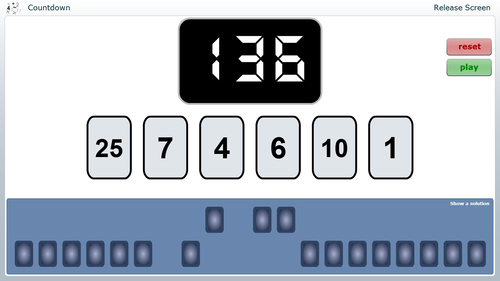
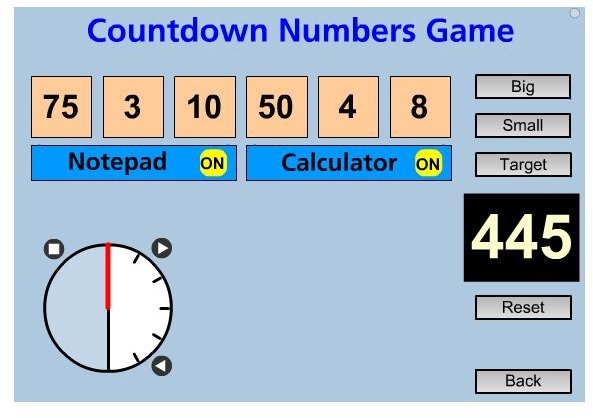
Implementation requires setting up a dedicated workspace equipped with a visible digital or mechanical timer alongside the printed material. Participants review the target number and available digits, establishing a brief observation window before the countdown begins. Once initiated, learners record their intermediate calculations directly onto the sheet, fostering a clear audit trail for subsequent review. Educators can integrate these exercises into daily warm-ups, transition periods, or dedicated math extension centers.
Practical Tips for Success
Preparation involves laminating reusable sheets or providing dry-erase pockets to encourage repeated trials without paper waste. Execution benefits from establishing a strict rule where students must articulate their reasoning aloud during post-countdown reviews, solidifying conceptual understanding. Extension activities can be introduced by modifying target numbers or restricting allowed operational symbols to increase difficulty for advanced participants.
Stage-Appropriate Recommendations
Beginner stages focus on simpler numerical ranges and extended time limits to build baseline confidence in foundational arithmetic. Advanced tiers introduce multi-digit targets and complex operational constraints that demand sophisticated logic and foresight. According to Piaget’s theory of cognitive development, structuring mathematical challenges to match the transition from concrete operational thought to formal operational thought ensures optimal cognitive engagement without inducing excessive anxiety.
Structured problem-solving intervals improve cognitive flexibility — National Council of Teachers of Mathematics (NCTM)
Frequently Asked Questions
Explore More Free Printable Resources
Expanding analytical skillsets extends far beyond single exercises. Discover comprehensive learning tools, organizational templates, and engaging activities by visiting the main library at Free Printable For You to support continuous academic and personal development.
Images References