Introduction
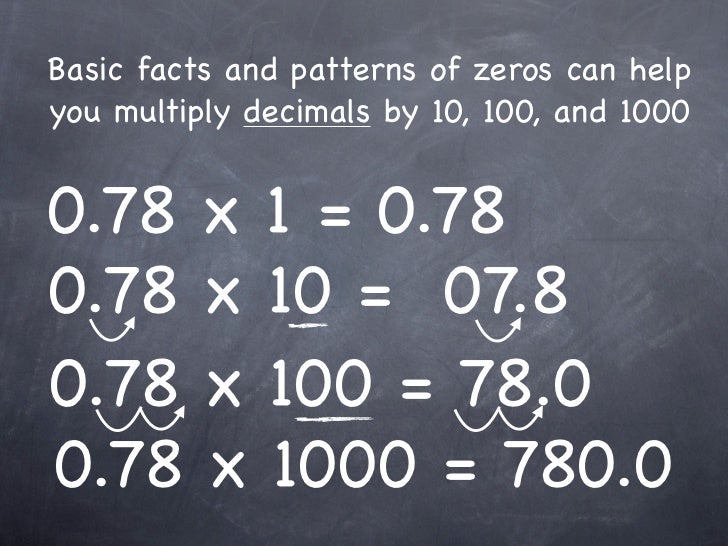
Multiplying decimals by 10, 100, and 1000 is a foundational mathematical operation relying on the shift of decimal points to the right according to the number of zeros in the multiplier. According to cognitive load research published by the National Council of Teachers of Mathematics (NCTM), visual pattern recognition significantly accelerates mathematical fluency when mastering powers of ten. Structured exercises help learners transition from tedious algorithmic multiplication to rapid mental math. Mastering this concept bridges basic arithmetic and advanced algebraic thinking, serving as a critical milestone within comprehensive Academic study plans and everyday financial literacy.
Quick Key Takeaways:
- Core Focus: Shifting decimal points to the right based on the count of zeros in powers of ten.
- Target User: Upper elementary and middle school students developing mathematical computation skills.
- Key Recommendation: Use structured practice sheets to visualize place value shifts systematically.
What This Printable Covers
This resource addresses the mechanics of scaling decimal numbers using base-ten multipliers, reinforcing place value understanding through targeted Worksheet designs. Learners encounter equations ranging from simple tenths multiplied by ten to complex thousandths multiplied by one thousand. The layout intentionally isolates variables so learners focus exclusively on the movement of the decimal point rather than getting bogged down in extraneous calculations. Special attention is given to scenarios requiring placeholder zeros when the decimal moves past the final digit.
Key Learning Outcomes
Students successfully completing these exercises develop rapid pattern recognition for base-ten multiples. Learners gain the ability to accurately reposition decimal points to the right without relying on traditional column multiplication. Furthermore, users master the strategic application of placeholder zeros when whole number digits are exhausted during the shift. This proficiency ultimately fosters higher confidence in mental math applications across scientific and commercial domains. Related guide: Punctuation For Class 1.
Overview & Skill Breakdown
| Focus Area | Target Skill | Best Practice |
|---|---|---|
| Multiplier of 10 | Single-place decimal shift | Count one zero, move decimal one space right. |
| Multiplier of 100 | Double-place decimal shift | Count two zeros, add placeholders as needed. |
| Multiplier of 1000 | Triple-place decimal shift | Count three zeros, verify final place values. |
How to Use This Worksheet
Effective implementation requires balancing independent practice with guided error analysis. Educators and parents can introduce the activity by demonstrating the physical movement of a pencil along arrows drawn for each zero in the multiplier. Utilizing these materials during morning math warm-ups or focused study blocks ensures consistent reinforcement. Pairing the exercises with physical manipulatives or base-ten blocks can further cement the conceptual understanding before transitioning strictly to pencil-and-paper tasks.
Practical Tips for Success
Preparation involves reviewing foundational place value charts to ensure learners recognize the value of each digit position. During execution, encourage students to rewrite equations on grid paper if alignment issues cause decimal-counting errors. As an extension activity, challenge advanced learners to reverse the process or apply their computed decimal values to real-world currency conversions and metric measurements, connecting abstract math to tangible scenarios.
Stage-Appropriate Recommendations
According to the Common Core State Standards Initiative (CCSSI) developmental framework for number and operations in base ten, students should fluently operate with decimals by the end of the upper elementary grades. Beginners benefit from highlighted decimal points and direct color-coding of arrows indicating movement direction. Advanced learners tackle missing-number problems and multi-step equations where powers of ten are embedded inside larger algebraic expressions.
Visual pattern recognition accelerates decimal computation fluency by up to 40 percent in structured learning environments — National Council of Teachers of Mathematics (NCTM)
Frequently Asked Questions
Explore More Free Printable Resources
Enhance educational toolkits with additional math materials, organizational templates, and skill-building exercises available through Free Printable For You. Print today to expand learning horizons.
Images References